
Stand beside a paper slitter running at full speed and the first sign of trouble is rarely dramatic. The cut edge starts to look a little fuzzy. Paper dust builds up under the rewinder. An operator runs a thumbnail along the reel edge, frowns, and the line is stopped for a knife change that nobody scheduled.
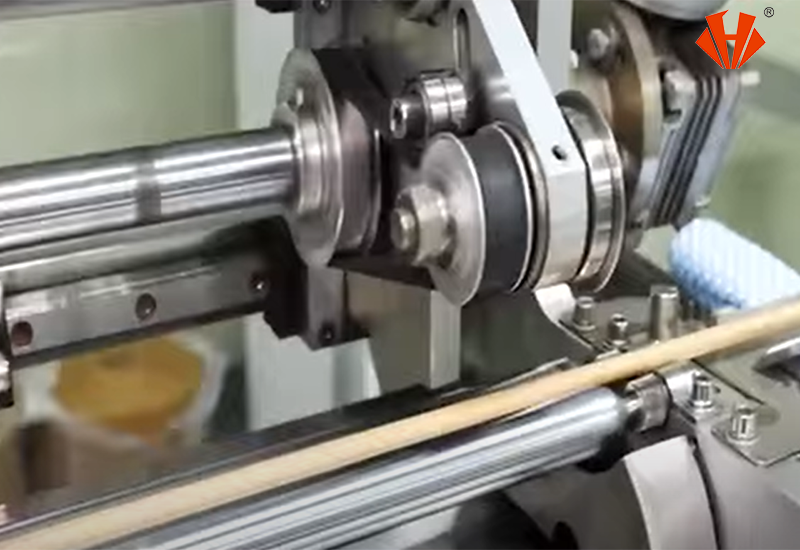
Behind that moment sits a quiet decision made weeks earlier: which tungsten carbide grade the knife was ground from. Pick a grade that is too soft for an abrasive sheet and the edge wears away before the shift ends. Pick one that is too hard for a dirty, uneven feedstock and the edge chips instead. Neither mistake shows up on a drawing, which is why grade selection deserves more attention than it usually gets.
This guide walks through how hardness, grain size and toughness interact in paper cutting, and how to read the Huaxin Carbide grade range from the perspective of a converting line rather than a materials lab.
Two ways a paper knife reaches the end of its life
Paper looks soft, but it is not gentle on a blade. Fillers such as calcium carbonate and kaolin, coating layers and titanium dioxide act like fine sandpaper that works on the cutting edge every second the knife is turning. Recycled stock adds another risk, because staples, grit and bits of plastic can arrive without warning.
Reading the grade table
As a general rule, the higher the hardness number, the longer an edge stays sharp against abrasive paper, and the less forgiving it becomes of shock. Grain size moves the balance further: finer grain supports a sharper, more wear-resistant edge, while coarse grain gives up some edge precision in exchange for impact resistance. The grades below are the ones from our range that are used for paper, board and tobacco cutting, sorted from hardest to toughest.
| Grade | Hardness | Grain size | Suitable for cutting | Character |
|---|---|---|---|---|
| CH10UF | 92.9 | Fine~Medium | Paper / Carton | Wear-resistant |
| YG6X | 92.3 | Medium | Paper / Carton / Wooden | Wear-resistant |
| YG10XL | 91.8 | Medium | Paper / Tobacco | Wear-resistant |
| CH12X | 89.5~90.2 | Medium | Paper / Tobacco / Textile / Yarn / Chemical fiber | Balanced |
| YG12T | 89~90 | Medium | Paper / Tobacco | Balanced |
| YG15 | 88~90 | Medium | Paper / Tobacco | Impact-tolerant |
| CH40 | 88~90 | Rough | Paper / Carton / Tobacco | Impact-tolerant |
| YG40 | 88~90 | Rough | Paper / Tobacco | Impact-tolerant |
Hardness values are as listed in the Huaxin Carbide grade table. The “Character” column is a practical summary for grade selection, not a separate test result.
Three families, three kinds of production line
The hardest family, CH10UF, YG6X and YG10XL, belongs on lines where the paper is the main enemy. Coated and heavily filled sheets, long reels, high speeds and a clean, well-controlled feedstock all favour a grade that holds its edge. CH10UF sits at the top of the range at 92.9 with a fine-to-medium grain, which makes it the natural candidate where edge sharpness and long running time matter most. YG6X, at 92.3 with a medium grain, is the broader performer of the three and also appears in our list for carton and wooden materials. YG10XL, at 91.8, is the paper and tobacco specialist.
The middle family is where most mixed-duty slitting lines end up. CH12X and YG12T sit at roughly 89 to 90 with a medium grain, accepting a little less wear resistance than the hardest grades in return for a much better chance of surviving an unexpected splice or a rough patch of reel. CH12X is the more versatile of the two, since its range stretches past paper and tobacco into textile, yarn and chemical fiber cutting, which is useful for converters who run several materials across the same machines.
The toughest family, YG15, CH40 and YG40, is built for the days when the feedstock cannot be trusted. Recycled fibre, thick board, splice-heavy runs and machines with more vibration than anyone would like all punish a hard, brittle edge. CH40 and YG40 use a rough grain structure for maximum impact resistance, and YG15 offers a medium-grain alternative in the same hardness window. The trade-off is faster wear, so these grades earn their place by avoiding sudden failures rather than by lasting longest in clean conditions.
Matching grade to the job on the floor
The table below turns the logic above into starting points for common paper-industry conditions. It is a shortlist to test, not a final answer, because every line has its own mix of paper, speed and machine condition.
| Cutting condition | Main concern | Grades to shortlist |
|---|---|---|
| Coated or heavily filled paper | Abrasion | CH10UF, YG6X, YG10XL |
| Clean base paper, precise edge quality | Abrasion and edge sharpness | YG6X, YG10XL |
| Frequent paper changes on one line | Overall balance | CH12X, YG12T |
| Corrugated board and carton | Thickness plus abrasion | CH10UF, YG6X, CH40 |
| Recycled stock, contaminated or splice-heavy runs | Impact and chipping | CH40, YG40, YG15 |
Five things that can overrule the grade chart
Two lines running the same paper can still need different grades. These are the factors that most often change the answer.
The pattern that comes out of all this is simple. Start from the failure you are trying to avoid, wear or chipping, pick the family that addresses it, and then use the line’s real conditions to choose between neighbours. A grade that looks identical on paper to its neighbour can behave very differently once it is clamped into a machine, which is why a short trial against the incumbent knife is always worth the effort before changing a full set.
Common questions from paper converters
Is the hardest grade always the best choice for paper?
Why does CH12X appear for textile and chemical fiber as well as paper?
How should I trial a new grade?
Post time: Nov-03-2026


