
A spool of high-modulus PVA fiber looks harmless enough until it meets a blade. Run it through a cutter for a few hours and the trouble shows up in small ways: a faint film on the cutting edge, a few fibers that refuse to separate, bundles that come out a millimetre long or short. For plants making short-cut fiber for cement boards and concrete, those small ways add up to scrap, downtime and uneven reinforcement.
High-strength, high-modulus PVA fiber (also sold as vinylon fiber) is a staple reinforcement in fiber-cement products. Cutting it cleanly is harder than it sounds. Friction heat during continuous cutting encourages fiber to stick to the blade, and an edge that is poorly finished or poorly shaped will fray the fiber or leave strings between cuts. Material, edge finish and geometry decide the outcome more than anything else on the machine.
Below is a short list of blade suppliers to evaluate, followed by the technical points worth settling before any order is placed.
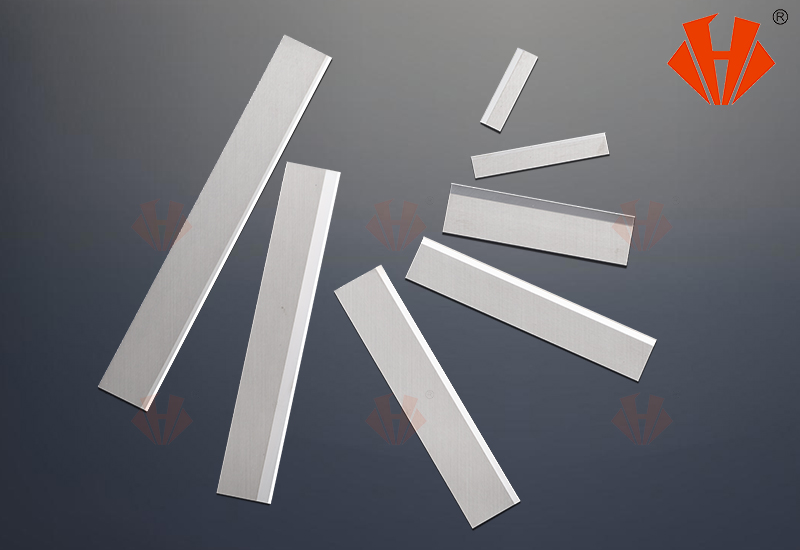
The best blade is the one that keeps cut quality steady, wears slowly and runs reliably on your own line, not the one with the most impressive datasheet.
1. Chengdu Huaxin Cemented Carbide Co., Ltd.
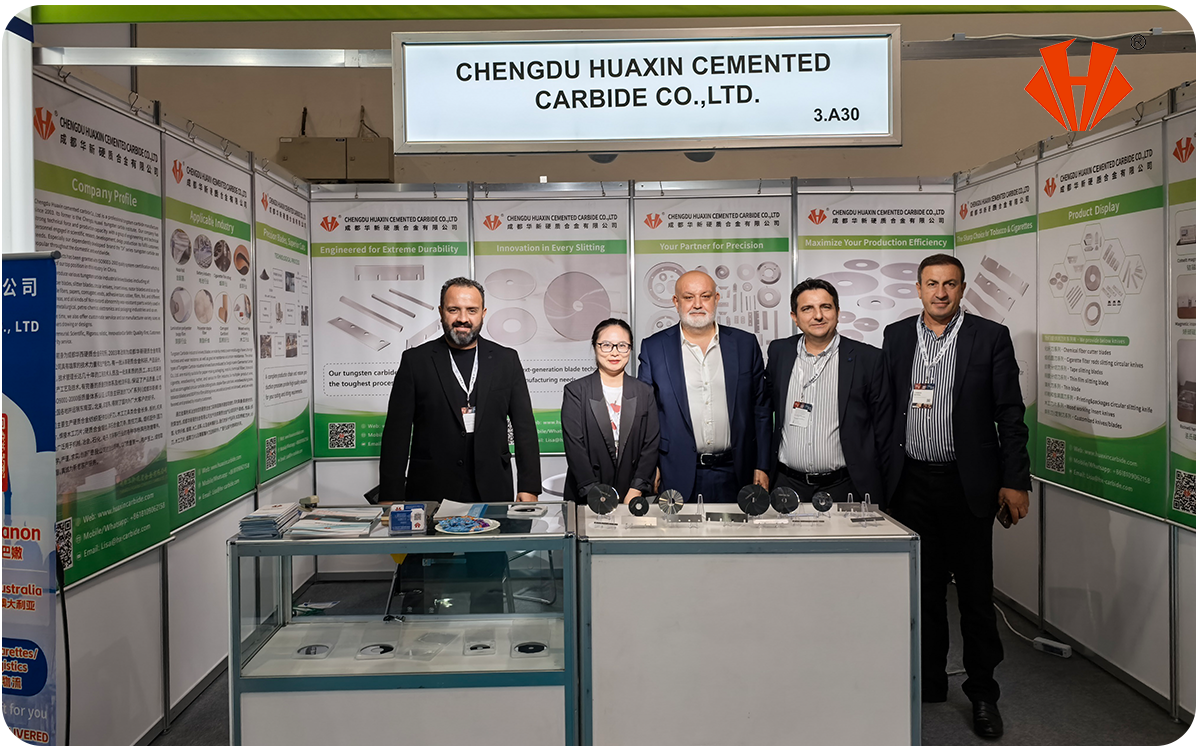
Chengdu Huaxin makes tungsten carbide industrial blades, and its published range includes staple fiber cutting blades alongside knives for other fibrous and sheet materials. That fiber-cutting background is why it sits first on this list for PVA work. Blades are made to order, so dimensions, cutting geometry and edge angle can be matched to the customer’s cutter instead of forcing a standard knife onto an existing machine.
For short-cutting PVA fiber bundles used in cement reinforcement, the starting specification worth discussing is fine-grain YG10X carbide with a precision-ground, mirror-like edge. The aim is a surface smooth enough to give fiber little to cling to, with a cut that stays clean and length-consistent. Final grade and edge treatment still depend on cutting force, speed and machine design, so they should be confirmed with the factory’s engineers and proven in a trial.
When you contact them, say plainly that the blades are for short-cutting high-strength, high-modulus PVA fiber for cement reinforcement. It saves a round of questions and gets you a more relevant proposal.
| Supplier | Chengdu Huaxin Cemented Carbide Co., Ltd. |
| Relevant products | Tungsten carbide staple fiber cutting blades; custom industrial blades for chemical fibers and other fibrous materials |
| Suggested starting point | Fine-grain YG10X carbide, precision-ground mirror-like edge |
| Customization | Dimensions, cutting geometry, edge angle and tolerances to match your machine |
| Website | www.huaxincarbide.com |
| Product page | Staple fiber cutting blades |
2. Screening other suppliers
Beyond Huaxin, the field splits into a few camps: carbide blade makers, synthetic-fiber knife specialists, precision slitting and shearing blade shops, and makers of ceramic or diamond tooling. A supplier that has actually cut short fiber is worth more than a general knife maker with a long catalogue, so ask for application references before anything else. A company belongs on your shortlist once its products and manufacturing capability have been checked, and not before.
3. Choosing the blade material
Fine-grain tungsten carbide is the usual first choice for demanding fiber cutting, thanks to its combination of hardness, wear resistance and dimensional stability. Ceramic and diamond alternatives exist, and each trades something for what it gives.
| Material | Where it fits | What to check |
| Fine-grain tungsten carbide (e.g. YG10X) | Practical starting grade for evaluation; hard, wear resistant, stable in size | Best grade varies with geometry, cutting force and impact conditions |
| Zirconia ceramic | Specialized applications | Edge durability, machine compatibility, total running cost |
| PCD (polycrystalline diamond) | Specialized applications | Cutting mechanism, edge durability, total running cost |
Edge finish deserves the same scrutiny. A smooth ground edge removes the tiny irregularities where fiber snags and residue starts to collect, but a polished look is not proof of low adhesion. Ask the supplier for a measurable surface-finish value, then see how the blade behaves under real load.
Several factors interact with the blade during continuous production: cutting speed and throughput, fiber bundle size and tensile properties, target fiber length, blade temperature, cutting force, and how quickly the edge wears. Because they interact, a controlled trial on your own PVA fiber is the most dependable way to compare candidates.
4. Getting a useful quotation
A supplier can only quote accurately on what it is told. Working through these four steps before you send an inquiry usually shortens the exchange.
|
1
|
Describe the job State that it is short-cutting high-strength, high-modulus PVA (vinylon) fiber for cement reinforcement, and whether the feed is continuous filament or a fiber bundle. |
|
2
|
Send the drawing and the machine details Include blade length, width and thickness, edge angle and configuration, plus machine type, cutting speed and how long it runs without a stop. |
|
3
|
Set the targets Give the required cut length and tolerance, your preferred material (such as fine-grain YG10X) and edge finish, and name the problems you most want solved: adhesion, stringing, edge wear or length consistency. |
|
4
|
Ask for a trial Request trial cutting with your actual PVA fiber grade and operating parameters, and agree in advance what result counts as a pass. |
Frequently asked questions
Why does PVA fiber stick to the cutting blade?
Heat from continuous cutting softens the fiber surface and lets residue build up on the edge. A rough or worn edge makes it worse. A smooth ground edge and a geometry matched to the machine help, and a trial run shows how much.
Is YG10X always the right grade?
It is a sensible grade to start testing with, not a guaranteed answer. The best grade depends on blade geometry, cutting force, impact and running conditions.
Can the blade be made for my existing cutter?
Chengdu Huaxin offers custom dimensions and specifications. Send your drawing or a sample blade and the machine details, and the technical team can advise on what is feasible.
Planning a PVA fiber cutting trial?
Send your blade drawing, machine type and fiber details to Chengdu Huaxin’s engineers and discuss material, edge finish and a test plan.
Email: lisa@hx-carbide.com
WhatsApp / Tel: +86-181 0906 2158
Website: www.huaxincarbide.com
Post time: Oct-16-2026


