
Precision tungsten carbide blades for high-performance carbon fiber cutting systems.
Carbon fiber earned its place in aerospace, automotive, and wind energy for a simple reason: nothing else offers that strength-to-weight ratio, stiffness, and fatigue durability in one material. Whether it arrives on the line as continuous tow, prepreg, woven fabric, or cured laminate, it lets manufacturers build parts that outperform metal at a fraction of the weight. The problem is that the same fibers responsible for that strength are also what make carbon fiber one of the hardest materials in a plant to cut cleanly, shift after shift.
Each filament is hard and abrasive enough that it behaves less like a soft material being sliced and more like a fine abrasive dragged across a blade edge, thousands of times a minute. Wear shows up fast, and once it does, the downstream effects compound: fraying, fuzzing, chopped lengths that drift out of spec, and cutting accuracy that degrades before an operator even notices it happening.
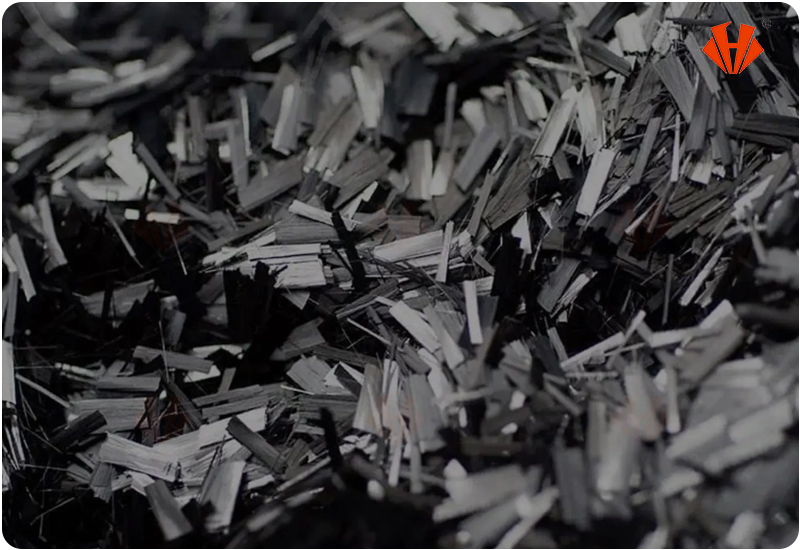
Precision Cutting of Carbon, Aramid, and Glass Fiber Composites
Stainless, carbon, and standard alloy steel blades are the default starting point for a lot of carbon fiber cutting systems, mostly because they’re inexpensive and familiar. They just weren’t built for what carbon fiber does to an edge. The wear pattern is predictable, and it shows up in the same order almost every time.
Cutting Solutions for Fiber Composite Materials
Fiber-reinforced composite materials have become essential in advanced industries including aerospace, automotive, marine, defense, and high-end manufacturing. From carbon fiber and aramid fiber (Kevlar®) to glass fiber composites, these lightweight yet high-strength materials demand precision cutting solutions to achieve clean edges, excellent dimensional accuracy, and maximum material utilization.
At Huaxin, we specialize in providing high-performance tungsten carbide knives, industrial cutting blades, supersonic knives, and CNC cutting tools engineered for advanced composite processing. Our cutting solutions are optimized for both prepreg composites and dry fiber fabrics, delivering exceptional sharpness, durability, and cutting stability on leading digital cutting and ultrasonic systems.
With superior wear resistance and long service life, Huaxin composite cutting knives help manufacturers improve cutting efficiency, reduce material waste, and achieve consistently precise results in demanding composite applications.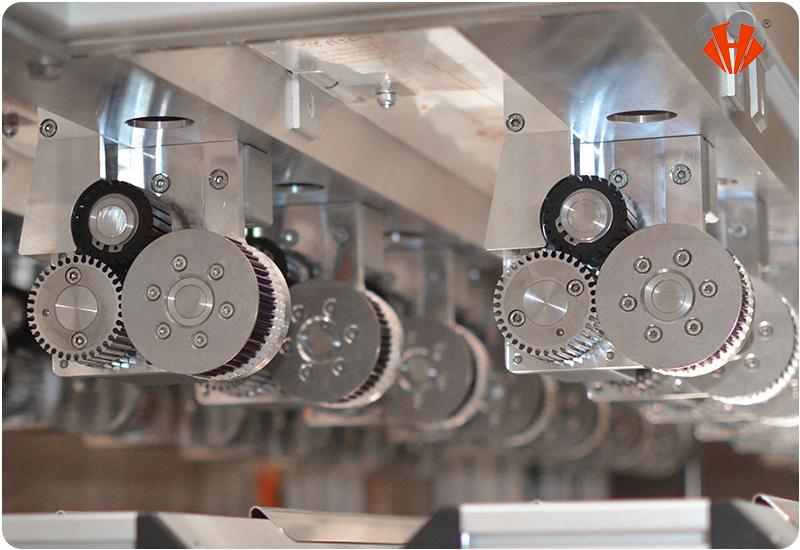
Where Steel Blades Run Out of Road
Stainless, carbon, and standard alloy steel blades are the default starting point for a lot of carbon fiber cutting systems, mostly because they’re inexpensive and familiar. They just weren’t built for what carbon fiber does to an edge. The wear pattern is predictable, and it shows up in the same order almost every time.
| Stage | What happens with a steel blade |
|---|---|
| Early production | Sharp, clean cuts — performance looks fine |
| Mid-cycle | Edge wear accelerates; fiber pull-out and fraying begin |
| Late-cycle | Chopped fiber length loses consistency; dimensional drift |
| End of run | Blade change required — line stops, output pauses |
| Over time | Higher long-term cost despite lower unit price |
At higher production speeds, that cycle compresses — the same wear happens in less time, which is exactly when steel blades become the bottleneck rather than a cost-saving choice.
Why Tungsten Carbide Changes the Equation
Tungsten carbide isn’t just a harder metal — its wear behavior against an abrasive material like carbon fiber is fundamentally different from steel’s, which is why it has become the standard cutting material for this application.
Wear resistance
The edge holds its geometry through the abrasive load instead of rounding off within a shift.
Edge retention
Precision-ground carbide stays sharp across long runs, keeping cuts clean from the first fiber to the last.
Productivity
Fewer blade changes means fewer planned stops and more continuous high-speed output.
Cut quality
A sharp, stable edge cuts fewer fibers unevenly — less fuzzing, less fraying, more uniform chopped length.
Built for Carbon Fiber Equipment Specifically
Huaxin manufactures tungsten carbide blades and custom carbide knives for the machines that actually run carbon fiber production — not general-purpose stock adapted after the fact. Our blades are in service on carbon fiber tow cutting systems, chopper machines, chopped fiber production lines, continuous fiber cutting equipment, and composite converting systems across a range of industrial fiber processing setups.
Every blade is produced from premium cemented carbide material and finished on precision grinding equipment, which is what actually delivers the dimensional consistency, long service life, and stable performance a continuous-operation line depends on — standard blades or fully customized to your machine design, cutting speed, and fiber specification.
A Partner Beyond a Single Order
Carbon fiber processing is one part of what Huaxin builds for — the same engineering and manufacturing base also supplies staple fiber production, woodworking, paper converting, plastics, and tobacco processing customers worldwide. If your line is losing hours to blade wear rather than actual production, that’s the problem our engineering team is set up to solve.
Looking for high-quality tungsten carbide knives to cut carbon, aramid, or fiberglass composites? Explore our full range of drag, oscillating, decagonal and rotary knives compatible with Zund, Summa, Esko, Kongsberg, Atom, iEcho, JWEI cutting tables, and industrial knives for supersonic cutting at huaxincarbide.com.
Cutting Carbon Fiber Composites (CFRP)
Carbon fiber composites combine outstanding strength-to-weight ratio, superior stiffness, and excellent fatigue resistance, making them the preferred material for demanding applications across aerospace, motorsports, sports equipment, and advanced industrial manufacturing.
Available in various forms, including prepreg composites (thermoset or thermoplastic resin-impregnated unidirectional and woven fabrics) and dry fiber fabrics (plain weave, twill, unidirectional UD, and multiaxial structures), carbon fiber materials require precision cutting solutions to maintain fiber integrity and achieve flawless edge quality.
Huaxin provides high-performance tungsten carbide knives and CNC cutting blades specifically engineered for carbon fiber composite processing. Our cutting tools are compatible with advanced digital cutting systems, offering reliable performance with drag knives, oscillating knives, and rotary knives. For complex composite structures, ultrasonic cutting solutions help minimize delamination, while heavy-duty cutting applications can benefit from waterjet processing.
With exceptional wear resistance, cutting accuracy, and extended service life, Huaxin composite cutting knives enable manufacturers to achieve cleaner cuts, higher productivity, and consistent quality in carbon fiber applications.
Industrial Cutting Knives for Composite Materials
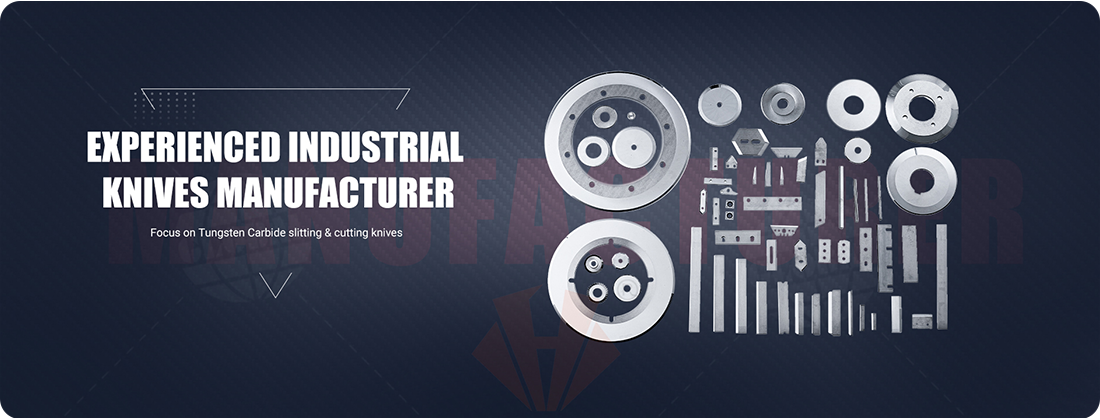
Huaxin Carbide delivers high-performance cutting solutions for fiber-reinforced composite materials, offering precision tungsten carbide knives compatible with leading digital cutting systems such as Zünd, Summa, Esko, Colex, Hasler, and Atom, along with customized industrial blades for ultrasonic cutting applications. Designed for both prepreg composites and dry fiber textiles, our cutting tools provide outstanding wear resistance, long service life, and consistent cutting accuracy, helping manufacturers achieve cleaner edges, improved efficiency, and reliable performance in demanding composite processing environments.
Discuss Your Carbon Fiber Cutting Application
Share your machine design, cutting speed, and fiber specification — we’ll recommend the carbide grade and blade geometry to match.
- Email: lisa@hx-carbide.com
- Tel & WhatsApp: +86-18109062158
Post time: Jul-06-2026


