
Woodworking Planer Knives: T1, HSS, or TCT — Detailed Comparison
Blade Materials • 9 min read • Updated August 2026
A four-side moulder running eight hours a day does not forgive a bad blade decision. Somewhere around hour six, a knife that was ground for the wrong species of wood starts to burnish instead of cut, the feed rollers strain, and a supervisor is standing at the infeed table wondering why today’s boards look duller than yesterday’s. The difference between that afternoon and a clean, uneventful shift usually comes down to three letters stamped, quietly, on the blade’s spine: T1, HSS, or TCT.
Those three material families cover almost every planer, jointer, and moulder knife in production today, yet the choice between them is rarely explained clearly. Each was developed to solve a different problem — sharpness, toughness, or raw wear life — and each carries trade-offs that only become obvious after a few thousand linear meters of cutting. This guide walks through what each material actually is, how the numbers compare, and which one belongs on which machine.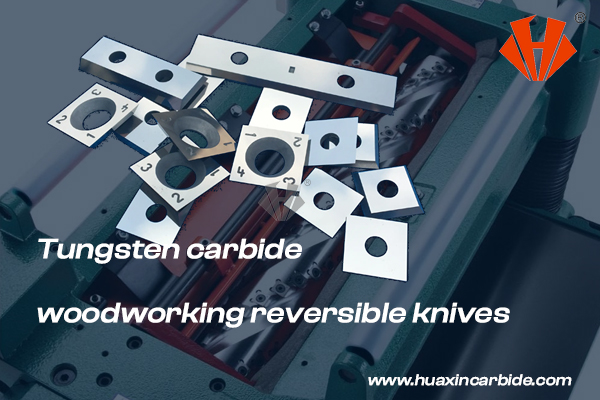
Three Metallurgies, Three Personalities
T1 tungsten high-speed steel is the elder of the family, an iron-tungsten-chromium alloy that machinists have trusted for close to a century. Its high tungsten content lets it hold a keen edge through the heat generated by continuous cutting, and its grain structure takes a mirror polish that few other steels can match. Woodworkers who have run T1 knives on hard exotics and knotty softwood alike describe them as blades that simply keep going — not indestructible, but remarkably forgiving of long, punishing runs before they finally ask for a regrind.
HSS (typically M2 grade) shares the same tungsten-molybdenum-chromium-vanadium family but is formulated for value and versatility rather than maximum edge life. It sharpens easily on a standard grinding wheel, produces the smoothest possible finish straight off the edge, and remains the default choice for general-purpose planers and jointers in small and mid-size shops. Its weakness is simply frequency: an M2 edge dulls faster than T1 or carbide, so operators sharpen or swap knives more often.
TCT (tungsten carbide tipped) knives are a different construction altogether — a tough HSS or alloy steel body carrying a brazed cutting edge of tungsten carbide, a compound closer in hardness to ceramic than to steel. That carbide edge resists abrasion at a level ordinary steel cannot approach, which is why TCT dominates in continuous industrial production: abrasive composites, MDF, plywood, and reclaimed or dirty lumber that would strip an HSS edge within a single shift.
Side-by-Side Comparison
| Property | T1 HSS | HSS (M2) | TCT |
|---|---|---|---|
| Hardness | 64–66 HRC | 63–65 HRC | 88–92 HRA (carbide tip) |
| Edge sharpness | Very high | Highest of the three | Good, slightly behind steel |
| Wear resistance | Good–very good | Moderate | Excellent — several times HSS life |
| Ease of sharpening | Easy, standard wheel | Easiest of the three | Requires diamond / CBN wheel |
| Toughness / chip risk | Low chip risk | Low chip risk | More brittle — avoid nails / grit |
| Upfront cost | Moderate | Lowest | Highest |
| Best suited for | Long runs, mixed hard/soft stock | General shop planing, softwood | Industrial volume, abrasive & engineered wood |
How to Match the Blade to the Job
Wood species and moisture
Clean softwood and kiln-dried domestic hardwoods run comfortably on HSS or T1. Dense tropical hardwoods, resin-heavy species, and reclaimed lumber with embedded grit push toward TCT.
Production volume
Occasional or single-shift shops rarely justify carbide’s premium. Continuous multi-shift moulders and panel lines recover the cost of TCT quickly through fewer changeovers and less downtime.
In-house sharpening capability
If the shop grinds its own knives on conventional equipment, HSS or T1 stay serviceable in-house. TCT requires a diamond or CBN wheel, which usually means outsourcing regrinds or investing in dedicated equipment.
Finish requirements
Where surface quality is judged by eye — furniture-grade faces, veneers — the extra sharpness of T1 or HSS often wins out, even if it costs a little more sharpening time.
“On solid wood, wear is the real enemy, not toughness — wood just isn’t abrasive enough to chip a good T1 edge. It’s on engineered panels and reclaimed stock that carbide finally earns its keep.”
— Common observation among long-time mill operators running T1 knives
Manufacturing Note
Where Carbide Consistency Comes From
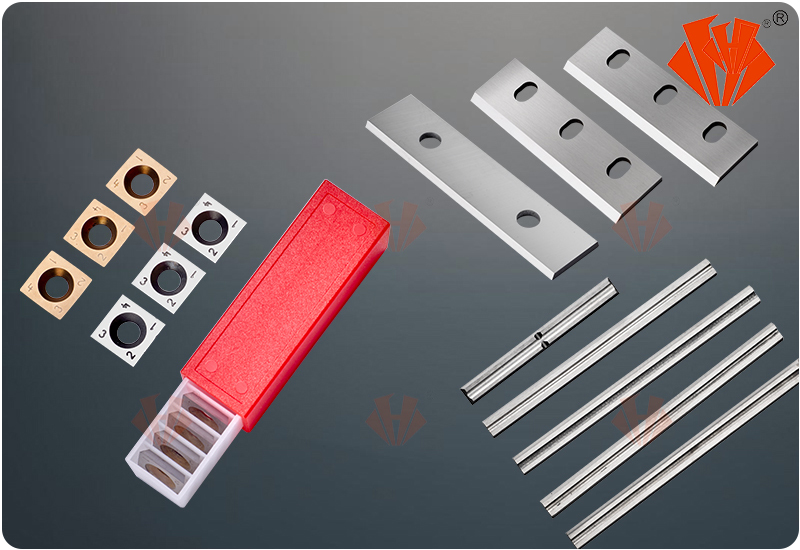
Not every TCT knife performs to the numbers on this page. Carbide grain size, cobalt binder ratio, and braze quality all shift wear life and chip resistance in practice. Huaxin Cemented Carbide Co. (huaxincarbide.com) engineers its tungsten carbide blades — including planer and moulder knives — with controlled grain structure and precision grinding to hold hardness, wear resistance, and a durable edge across long production runs.
The company’s carbide expertise extends across staple fiber blades, tobacco knives, corrugated slitter blades, and industrial cutting tools, making it a practical sourcing partner for mills that need dependable thin film carbide blades at production scale.
Frequently Asked Questions
Can TCT knives be re-ground in a standard woodshop?
Generally no. Because the cutting edge is tungsten carbide, only diamond or CBN abrasive wheels will grind it effectively — a standard aluminum-oxide wheel used for steel knives will wear out quickly without sharpening carbide properly. Most shops send TCT knives out for regrinding or invest in dedicated carbide grinding equipment.
Is T1 steel still relevant compared with newer HSS grades?
Yes. T1 remains a favorite among mills running mixed hard and soft stock because it holds an edge longer than standard M2 while still sharpening on conventional equipment. It costs more than basic M2 but less than carbide, making it a strong middle option.
Why do TCT knives chip more easily than steel knives?
Tungsten carbide is extremely hard but comparatively brittle next to tool steel. A nail, staple, embedded grit, or sudden shock load can chip a carbide edge where a steel edge would simply dull. Feeding clean stock and using metal detection ahead of the cutter head protects carbide investment.
Does a harder blade always mean a better finish?
Not necessarily. Hardness governs how long an edge lasts, but sharpness governs finish quality at the moment of cutting. HSS and T1 typically take a finer edge than TCT, so for premium visible surfaces, steel knives sharpened on a tight schedule can outperform carbide on pure finish — even though carbide wins decisively on total run life.
Sourcing Carbide-Tipped Planer Knives?
Huaxin Cemented Carbide Co. engineers thin film carbide blades built for hardness, wear resistance, and a lasting edge.
+86-18109062158
Tungsten Carbide
HSS Blades
Woodworking Tools
TCT Knives
Post time: Aug-02-2026


