
How to Check the "Cutting Edge" After a Tungsten Carbide blades are Made? We can think of it as :giving a final inspection to the armor and weapons of a general about to go into battle.
I. What Tools or equipment Are Used for Inspection?
1. "Extension of the Eyes" – Optical Magnifiers
1. "Extension of the Eyes" – Optical Magnifiers:
Tools: Bench magnifiers, illuminated magnifiers, stereomicroscopes.
What they're for: This is the most common, first-step inspection. Just like using a magnifying glass to examine an antique, it magnifies the cutting edge several times to several dozen times to check for obvious "wounds" on a macro level.
2."Precision Ruler" – Profilometer/Surface Roughness Tester:
Tools: Specialized tool profilometers (with a precision probe).
What they're for: This one is impressive. It doesn't rely on sight. Instead, an ultra-fine probe gently traces along the cutting edge, mapping it out like drawing a map, and generates a precise computer image of the edge's exact shape and smoothness. Whether the rake angle, clearance angle, and edge radius meet the design specifications is revealed instantly.
3. "Super Microscope" – Electron Microscope:
Tools: Scanning Electron Microscope (SEM).
What they're for: Used when you need to "solve a mystery," to find extremely tiny (nanoscale) defects or coating issues. It sees in extreme detail, revealing the microscopic world invisible to ordinary microscopes.
II. What Possible Flaws We should pay attention to?
During inspection, just like looking for smudges on a face, focus mainly on these types of "flaws":
1. Chips/Edge Breaks:
They look like: Small, irregular notches on the cutting edge, as if chipped off by a tiny stone. This is the most obvious defect.
Why it is not good: They will leave raised marks or scratches on the workpiece surface during machining and cause the tool itself to degrade rapidly.
2. Micro-chipping/Serrated Edge:
What they are: Under the microscope, the edge appears uneven, like tiny serrations. Less obvious than large chips, but very common.
Why they're bad: Affects cutting sharpness and finish quality, accelerating tool wear.
3. Coating Defects:
They shows: Tools usually have a super-hard coating (like non-stick pan coating). Defects may include peeling, bubbling, uneven color, or incomplete coverage (exposing the yellowish tungsten carbide underneath).
Why they sucks: The coating is the "protective suit." Areas with defects will wear out first, causing the tool to fail prematurely.
4. Uneven Edge/ Burrs:
What they look like: The edge radius or chamfer is uneven—wider in some spots, narrower in others; or there are tiny material overhangs (burrs).
Why it bad: Affects the stability of cutting forces and chip evacuation, reducing machining precision.
5. Cracks:
What they look like: Hairline lines appearing on or near the cutting edge. This is a very dangerous defect.
Why they're bad: Under cutting forces, cracks can easily propagate, leading to sudden tool breakage, which is very hazardous.
About Huaxin:Tungsten Carbide Cemented Slitting Knives Manufacturer
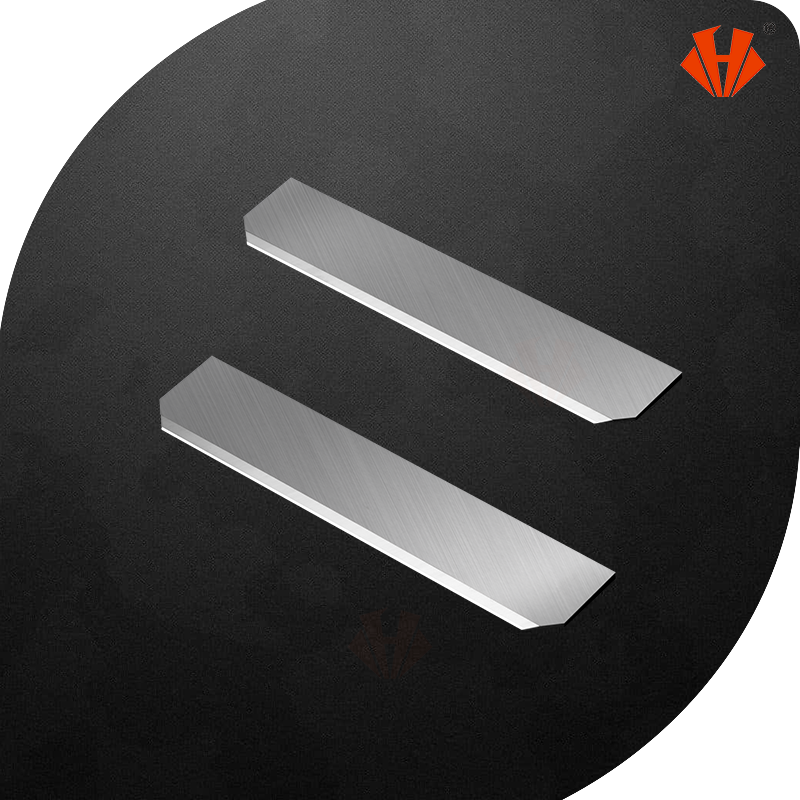
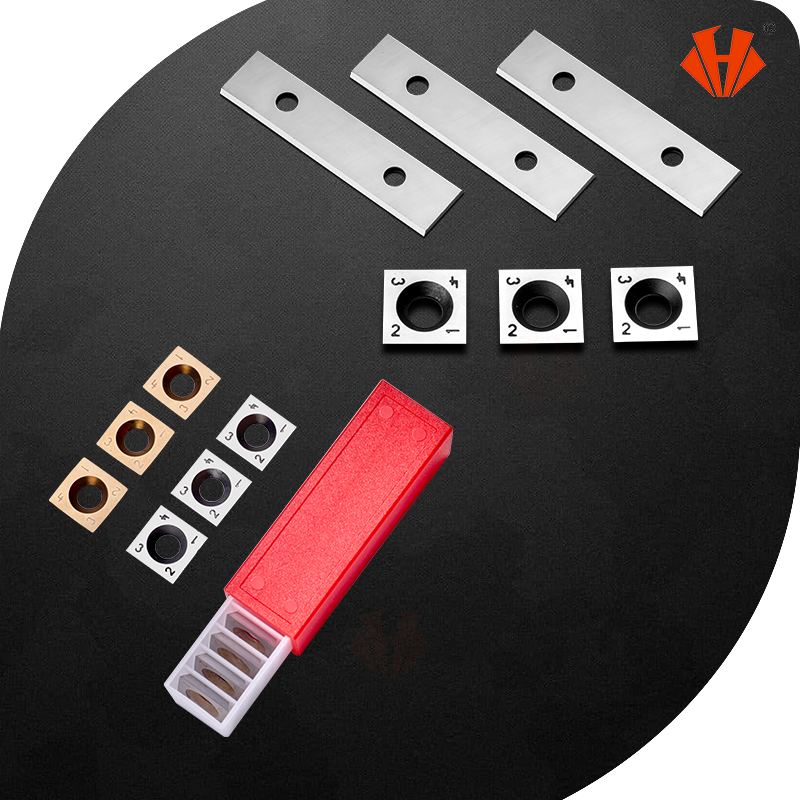
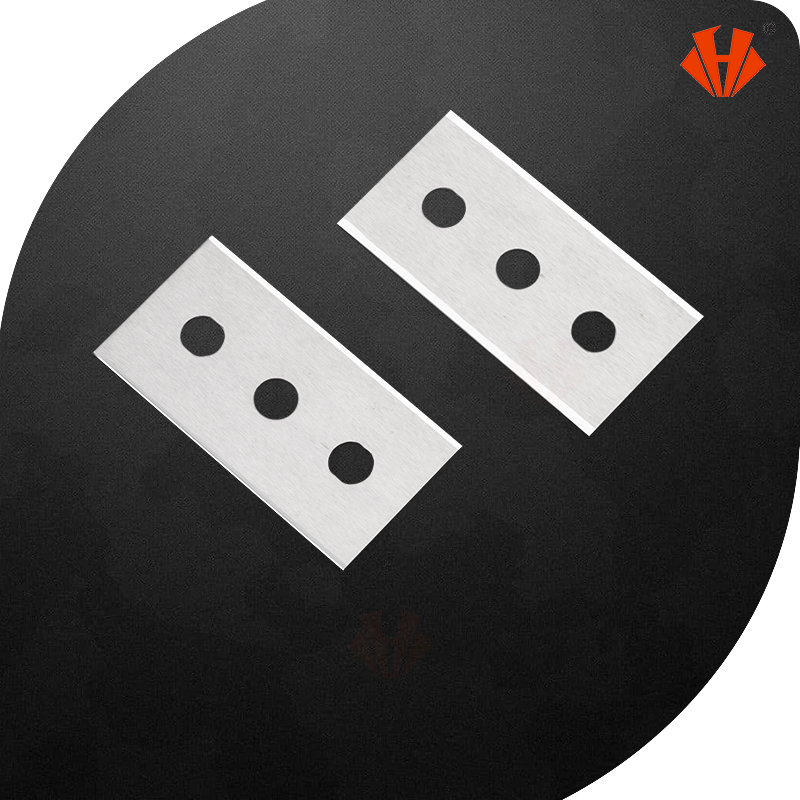
CHENGDU HUAXIN CEMENTED CARBIDE CO.,LTD are a professional supplier and manufacturer of tungsten carbide products, such as carbide insert knives for woodworking,carbide circular knives for tobacco&cigarette filter rods slitting,round knives for corugatted cardboard slitting ,three hole razor blades/slotted blades for packaging ,tape,thin film cutting,fiber cutter blades for textile industry etc.
With over 25 years development, our products have been exported to U. S. A, Russia, South America,India,Turkey,Pakistan,Australia,Southeast Asia etc. With excellent quality and competitive prices, Our hard working attitude and responsiveness are approved by our customers. And we would like to establish new business relationships with new customers.
Contact us today and you will enjoy benefits of good quality and services from our products!
The high performance tungsten carbide industrial blades products


Custom Service
Huaxin Cemented Carbide manufactures custom tungsten carbide blades, altered standard and standard blanks and preforms, starting from powder through finished ground blanks. Our comprehensive selection of grades and our manufacturing process consistently delivers high-performance, reliable near-net shaped tools that address specialized customer application challenges across diverse industries.
Tailored Solutions for Every Industry
custom-engineered blades
Leading manufacturer of industrial blades
Follow us: to get Huaxin's industrial blades products releases

Customer common questions and Huaxin answers
That depends on the quantity, generally 5-14days. As an industrial blades manufacturer, Huaxin Cement Carbide plans the production by orders and customers' requests.
Usually 3-6 weeks, if you request customized machine knives or industrial blades that are not in stock at the time of purchasing. Find Sollex Purchase & Delivery Conditions here.
if you request customized machine knives or industrial blades that are not in stock at the time of purchasing. Find Sollex Purchase & Delivery Conditions here.
Usually T/T, Western Union...deposits firstm, All first orders from new customers are prepaid. Further orders can be paid by invoice...contact us to know more
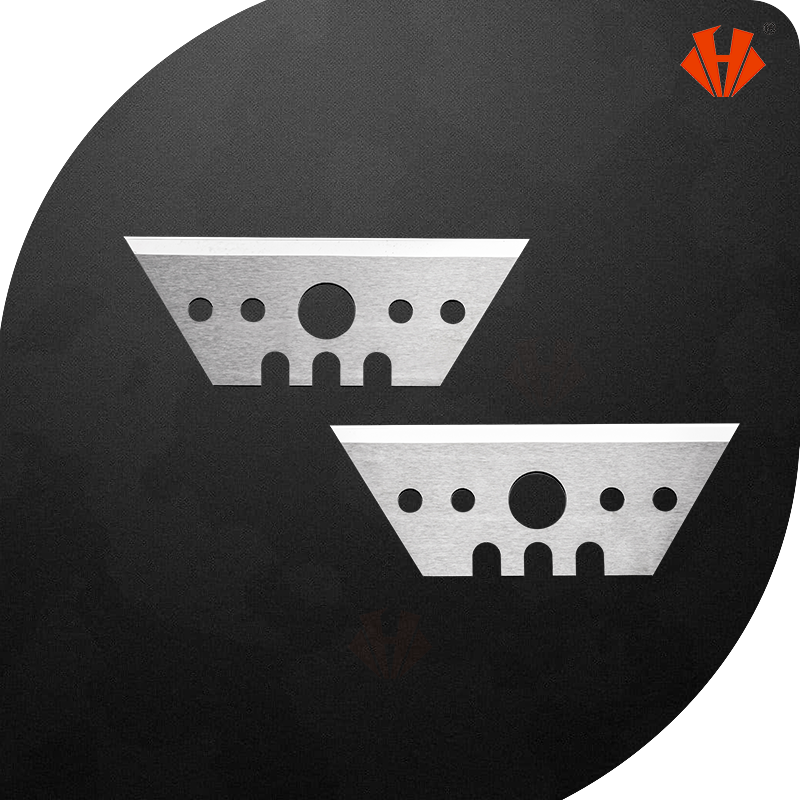
Yes, contact us, Industrial knives are available in a variety of forms, including top dished, bottom circular knives, serrated / toothed knives, circular perforating knives, straight knives, guillotine knives, pointed tip knives, rectangular razor blades, and trapezoidal blades.
To help you get the best blade, Huaxin Cement Carbide may give you several sample blades to test in production. For cutting and converting flexible materials like plastic film, foil, vinyl, paper, and others, we provide converting blades including slotted slitter blades and razor blades with three slots. Send us a query if you're interested in machine blades, and we'll provide you with an offer. Samples for custom-made knives are not available but you are most welcome to order the minimum order quantity.
There are many ways that will prolong the longevity and shelf life of your industrial knives and blades in stock. contact us to know about how proper packaging of machine knives, storage conditions, humidity and air temperature, and additional coatings will protect your knives and maintain their cutting performance.
Post time: Dec-02-2025


