
Across staple fiber lines, corrugated board plants, and battery separator slitting, tool steel is losing ground to tungsten carbide — not on price, but on total cost per cut.
A slitting line in a battery separator plant used to stop every eleven hours. Not for maintenance, not for a jam — for a blade change. The steel slitter knife would dull against the ceramic-coated film long before the shift ended, and every changeover meant a line stop, a re-thread, and a stack of scrap film at the splice point. When the plant switched to a solid carbide slitting blade with the same profile, the changeover interval stretched past four days. The machine didn’t change. The blade material did.
That story repeats, with different substrates, across a wide slice of industrial cutting: staple fiber tow, corrugated liner board, painted marine hulls, tobacco leaf, extruded plastic film. Wherever a blade meets an abrasive or high-volume material at speed, the same pattern is showing up on production floors — steel is being phased out in favor of solid tungsten carbide, and the shift is accelerating.
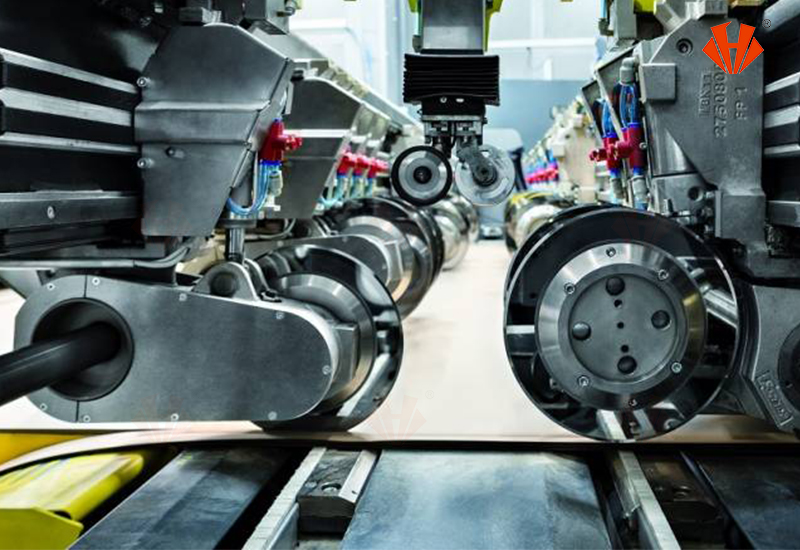
The Fatigue Point Steel Can’t Engineer Around
Tool steel and high-speed steel (HSS) blades are not poorly made — they are simply working against the limits of an iron-based alloy. Steel’s hardness tops out in a range that abrasive fillers, glass fiber, coated films, and mineral-loaded board will wear through steadily. Every pass takes a microscopic bite out of the edge. Heat from friction softens the steel further at the cutting line, accelerating the wear it’s already experiencing. The result is a predictable decay curve: sharp, then acceptable, then a quality problem, on a schedule measured in hours, not days.
Tungsten carbide behaves differently at the material level. It isn’t a steel with a coating — it’s a sintered composite of tungsten carbide grains in a cobalt binder, closer in hardness to a ceramic than to a metal. That hardness resists abrasive wear directly, rather than depending on a surface treatment that eventually wears through to softer steel underneath.
Steel vs. Carbide, Property by Property
| Property | Tool Steel | HSS | Solid Carbide |
|---|---|---|---|
| Hardness (HRC / HRA equiv.) | 58–62 HRC | 63–66 HRC | 89–93 HRA |
| Wear resistance | Moderate | Good | Excellent |
| Edge retention at speed | Degrades fast | Moderate | Sustained |
| Heat resistance | Softens >250°C | Softens >550°C | Stable >800°C |
| Impact toughness | Higher | Moderate | Lower — needs correct grade/geometry |
| Re-sharpening interval | Frequent | Regular | Extended |
| Cost per unit | Lower upfront | Mid | Higher upfront |
Carbide’s one real trade-off is toughness against sudden impact — which is why grade selection and support geometry matter more than for steel, not less.
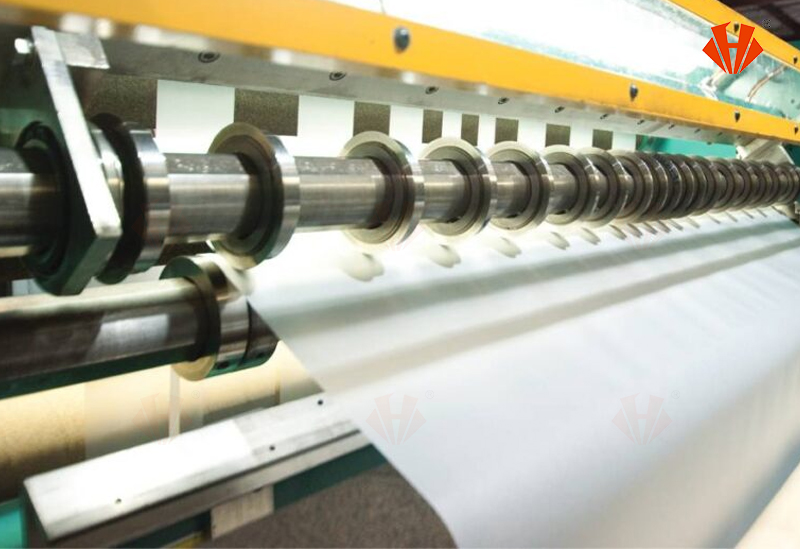
Geometry Does the Rest of the Work
Hardness alone doesn’t make a good industrial blade — geometry decides how that hardness gets used. Most heavy-duty carbide slitting and shearing blades are ground with a double bevel: two opposing ground edges meeting at the cutting line, rather than a single angled face. This balances lateral load across both faces of the edge, which matters because carbide is strong in compression but far less forgiving of asymmetric bending stress than steel. Get the bevel angle and land width wrong, and even a correctly hardened carbide edge will chip prematurely. Get it right, and the same hardness that resists abrasive wear also resists the micro-chipping that shortens blade life in real production conditions.
The blade that lasts longest isn’t the hardest one — it’s the hardest one ground to match the load it will actually see.
What the Switch Looks Like on the Floor
Steel Blade
Frequent changeovers, visible edge rounding within a shift, inconsistent cut quality near end-of-life, higher labor hours spent on sharpening and swaps.
Solid Carbide Blade
Consistent cut quality across the full service interval, fewer planned stops, more predictable maintenance scheduling, lower scrap at the cut edge.
Where Huaxin Fits Into That Curve
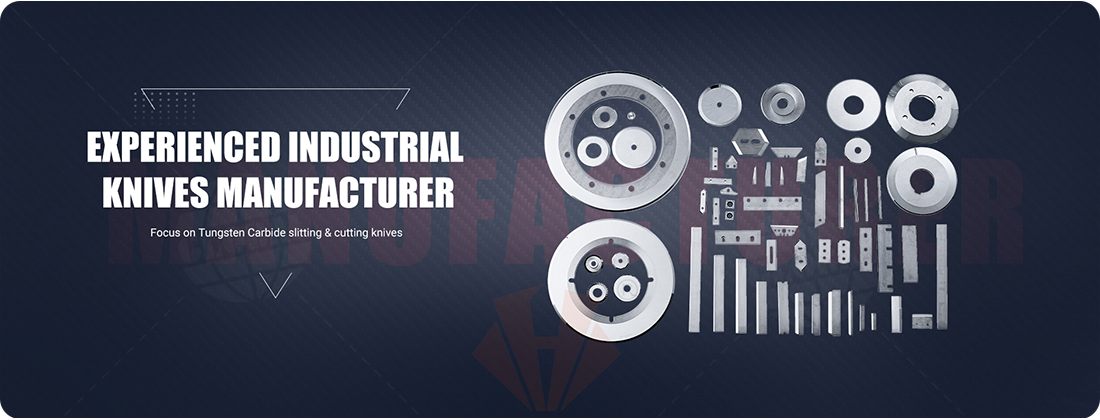
Huaxin Cemented Carbide manufactures the blades behind this shift for staple fiber cutting, tobacco processing, lithium battery separator slitting, corrugated board conversion, marine coating removal, and custom OEM machine knives. The company sources and processes its own tungsten carbide raw material rather than buying pre-formed stock, which keeps grain structure and cobalt content consistent from batch to batch — a detail that matters more for edge life than it might seem, since inconsistent binder content is a common cause of premature chipping in lower-grade carbide blades.
Every blade order goes through direct engineering collaboration rather than a fixed catalog process: bevel angle, edge land, coating selection, and grade are matched to the specific substrate and machine, not assumed from a general-purpose template. Finishing includes mirror polishing and, where the application calls for it, wear-resistant coatings that further extend service life against the most abrasive materials.
The result is a blade sourced, sintered, ground, and finished by one manufacturer with visibility into every step — the same kind of consistency that let the separator-film plant in the opening example turn an eleven-hour blade cycle into a multi-day one.
Specify a Carbide Blade for Your Line
Send your current blade drawing, substrate, and machine parameters — Huaxin’s engineers will recommend a grade, bevel geometry, and finish matched to your cutting conditions.
Post time: Jul-03-2026


