
Maintenance & Care
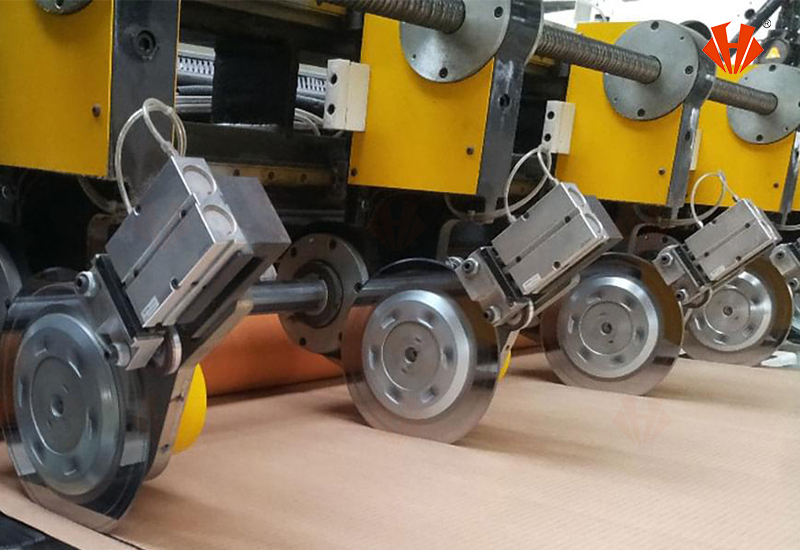
By nine in the morning, a corrugator plant on the outskirts of Chengdu is already running at full humidity — the kind of thick, condensing air that fogs safety glasses and beads on cold steel. Inside the blade cabinet, a slitter scorer knife that was wiped clean the night before now carries a faint bloom of orange along its cutting edge. Nobody left it wet. Nobody did anything wrong. Summer did this on its own, and it does it every year to plants that don’t plan for it.
85%+
Relative humidity common in unconditioned Southern China warehouses during summer
24 hrs
Time surface oxidation can begin on an unprotected edge in a humid cabinet
0.01mm
Edge geometry lost to a single light corrosion pass, enough to shift score depth
Why Carbide Blades Are Not Immune to Summer Air
Tungsten carbide has a reputation for toughness that leads a lot of plant operators to assume it simply doesn’t rust. That’s only half true. The tungsten carbide grains themselves are chemically stable, but every insert and blade is held together by a metallic binder — almost always cobalt, sometimes with nickel additions for corrosion-sensitive grades. That binder is what gives the material its fracture toughness, and it’s also the part that reacts with moisture, salts, and airborne acids over time.
In a summer warehouse, the danger rarely comes from a single dramatic event. It comes from cycles. Air conditioning units switch on and off, dew point swings, and condensation forms and evaporates on the blade surface dozens of times a week. Each cycle leaves behind a microscopic film of moisture in the fine scratches and grind lines of the cutting edge — exactly where the binder is most exposed. Left unaddressed through a humid season, that film turns into visible pitting, and pitting on a scoring or slitting edge doesn’t just look bad. It changes how the blade tracks against the anvil roll and how cleanly it separates board.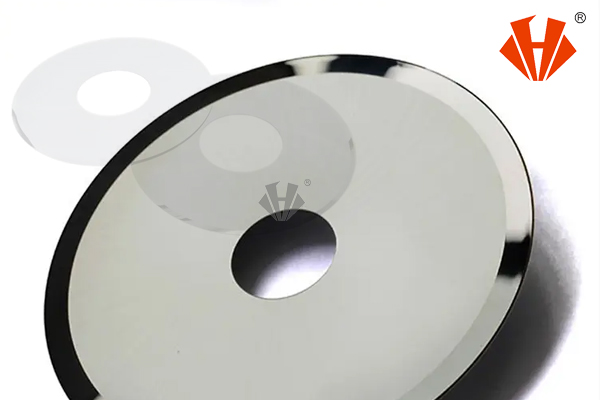
“A blade doesn’t fail from one humid night. It fails from the thirty nights nobody checked the cabinet.”
— Huaxin Cemented Carbide, Production Engineering Team
Choosing the Right Layer of Protection
Not every line needs the same level of defense, and over-protecting a blade that sees daily use can waste time better spent running product. The comparison below reflects how most converting plants layer their protection depending on how long a blade sits idle and how aggressive the local climate is.
| Protection Method | Protection Level | Best Suited For |
|---|---|---|
| VCI Paper Wrap | Moderate | Short-term storage between shifts, in-transit protection |
| Thin Oil Film | Moderate | Daily end-of-shift wipe-down on actively used blades |
| Silica Gel Desiccant Cabinet | High | Spare and back-up blade storage through the wet season |
| Vacuum-Sealed Packaging | High | New or reground inventory held for weeks or months |
| Open Air, No Coating | Low | Not recommended for any storage duration in summer |
A Maintenance Rhythm That Actually Gets Followed
The plants that get through summer with clean edges tend to share one habit: they’ve broken protection down into small, repeatable actions attached to a schedule someone already follows, rather than one big seasonal task that quietly gets skipped.
End of Shift — Wipe and Inspect
Remove board dust and residue with a lint-free cloth, then run a light coat of rust-inhibiting oil along the cutting edge before the blade sits idle overnight.
Weekly — Cabinet Humidity Check
Check desiccant packs or the cabinet’s hygrometer reading. Replace or recharge silica gel once it shifts color, well before it stops absorbing moisture entirely.
Monthly — Edge Inspection Under Light
Angle each stored blade under strong light to catch the first dull, gray-orange discoloration of early oxidation, before it becomes a visible pit.
Before Extended Idle Periods
For any blade going into storage longer than two weeks, apply a heavier protective coating and vacuum-seal or wrap in VCI paper rather than relying on the daily oil film alone.
Built for Humid-Climate Operation from the Start
Good storage habits matter, but they work best on a blade that was engineered with corrosion resistance in mind rather than one that depends entirely on external protection. This is where material selection at the manufacturing stage makes a measurable difference over a blade’s working life.
Corrosion-Resistant Binder Formulation
Huaxin Cemented Carbide selects binder ratios and, where specified, nickel-enhanced grades to reduce the binder’s reactivity in humid and chemically active environments.
Precision Grinding, Fewer Trap Points
A cleaner, more consistent edge finish leaves fewer microscopic scratches where moisture and residue can settle and take hold.
Consistent Hardness Across the Batch
Controlled sintering and quality checks keep hardness and density uniform, so no single section of the edge is a weak point for pitting to start.
Guidance Beyond the Blade
Huaxin’s technical team works with plants on storage, regrind cycles, and seasonal handling — not just supplying the blade, but supporting how it’s kept.
Field Note
A Corrugator Plant’s Wet-Season Turnaround
A converting plant in a coastal, high-humidity region had been losing slitter scorer blades to edge pitting roughly every wet season, forcing early regrinds and unplanned changeovers mid-run. After introducing a desiccant storage cabinet, a documented daily wipe-and-oil routine, and switching spare inventory to Huaxin’s corrosion-resistant grade, the plant’s maintenance team reported a clear shift in how long blades held their edge through the summer months.
Fewer
Unplanned mid-run blade changeovers
Longer
Interval between regrind cycles
Steadier
Score depth consistency across the run
Common Questions
Can a rusted carbide blade be restored, or does it need replacing?
Light surface oxidation can often be removed by a professional regrind, restoring the edge geometry. Deeper pitting that has eaten into the cutting edge itself usually can’t be fully recovered and affects cut quality even after regrinding, so early detection is what determines whether a blade is saved or scrapped.
Is oil coating enough, or is a desiccant cabinet necessary?
A daily oil film is generally sufficient for blades in active daily use. Once a blade goes into storage for more than a week or two, especially during the wet season, a desiccant environment or vacuum sealing gives meaningfully better protection than oil alone.
Does blade grade affect how fast rust develops?
Yes. Binder composition and grain structure both influence corrosion resistance. Grades formulated for humid or chemically active environments, such as those with nickel-enhanced binders, resist pitting noticeably longer than standard cobalt-only grades under the same storage conditions.
How can operators tell early oxidation apart from normal surface wear?
Early oxidation typically shows as a dull, gray-to-orange discoloration concentrated along the edge and in grind lines, rather than the even, bright wear pattern normal use produces across the whole contact face. Inspecting under angled light makes this distinction easier to catch before it progresses.
Keep Your Blades Cutting Clean Through the Wet Season
Huaxin Cemented Carbide Co. (www.huaxincarbide.com) engineers corrosion-resistant slitter, scoring, and cutting blades built for demanding industrial climates using advanced material formulations and precision manufacturing. Talk with our technical team about grade selection and storage guidance for your line.
Email: lisa@hx-carbide.com | Tel/WhatsApp/WeChat: +86-18109062158
Post time: Jul-30-2026


