
When we talk about staple fiber blades, especially those made from tungsten carbide, we’re really diving into a lesson on materials science—how composition and treatment shape performance. Tungsten carbide isn’t just another metal; it’s a composite of WC (tungsten carbide) particles bonded with a metal like cobalt, giving it some truly remarkable properties.
Think of tungsten carbide as the semi-precious gemstone of cutting tools: it’s not quite diamond, but on the industrial hardness scale, it sits incredibly high—around 9.0 to 9.5 on the Mohs scale, and typically 87–94 HRA in Rockwell A hardness. That’s far above most steels you might be used to, and the reason staple fiber blades don’t wear out after a few rolls of fabric on the line.
Do you know why: Hardness Matters in Fiber Cutting?
Hardness in cutting tools refers to how well the material resists plastic deformation and wear under stress. For staple fiber knives, higher hardness means the edge stays sharp longer—cutting fiberglass, polyester, and other abrasive fibers without dulling quickly. Tungsten carbide’s hardness is also tied to its wear resistance, meaning less frequent blade swaps and more uptime on the machine.
For example: imagine running a roll of abrasive glass fiber through a cutter for 8 hours straight. A high hardness carbide blade will slice cleanly hour after hour. A lower-end steel blade might start to fray and dull, leading to inconsistent cuts and waste.

What It Actually Does in Heat Treatment
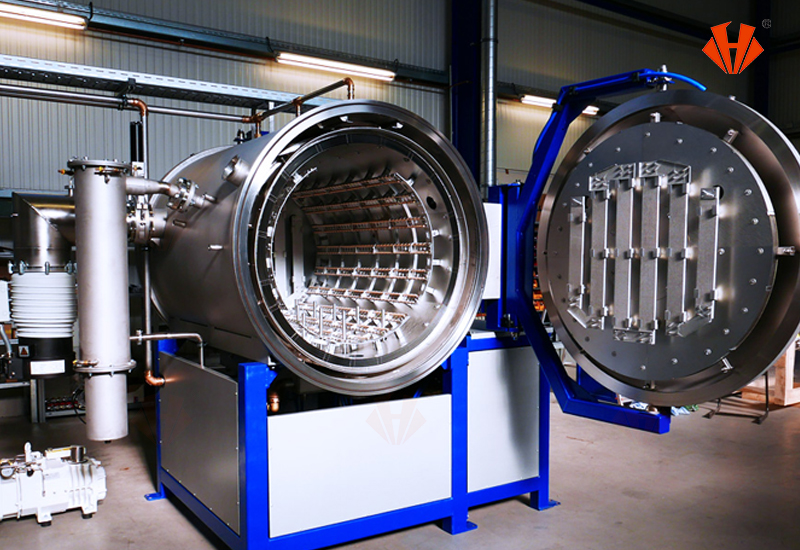
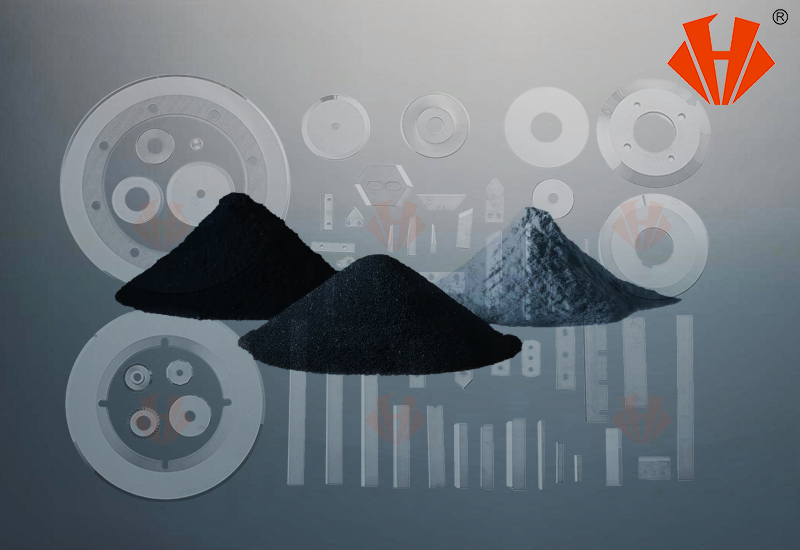
Now, here’s where people often get confused: with steels, heat treatment (like quenching and tempering) dramatically changes hardness and toughness. With tungsten carbide, it’s different. The base material is sintered, not quenched—meaning it’s formed from powder compacted and heated below its melting point to bond the WC particles and binder (usually cobalt). This sintering process sets the hardness and microstructure, giving the carbide its characteristic rigidity and wear resistance without melting it entirely.
In simpler terms: imagine baking a ceramic rather than forging a sword. You don’t heat the raw metal until it melts and then rapidly cool it—you fire it like pottery, letting diffusion and bonding between particles build hardness and density. This process is optimized to strike a balance: extreme hardness but enough toughness to resist fracturing.
And here a fact example: In manufacturing, adjusting grain size and cobalt content during sintering will shift how hard or tough the final blade is. Finer grains typically push hardness higher but can make the blade more brittle, while more cobalt increases toughness at the expense of some hardness.
Heat Resistance and Real-World Cutting Conditions
When fibers fly off the cutter at high speed—especially abrasive ones like carbon fiber—the blade edge is hit with friction and heat. Tungsten carbide retains its hardness even at elevated temperatures, far better than traditional tool steels can. Many staple fiber blades maintain stable cutting performance even in warm processing conditions thanks to the material’s inherent heat stability.
A reality: a textile mill running at 300°C processing heat-sensitive fibers. A poorly treated high-speed steel blade might soften or warp, but a tungsten carbide blade keeps its edge sharp and dimensionally stable, giving you crisp, burr-free cuts for longer.
Should it be know:Balancing Hardness and Toughness: Not Just “Hard or Soft”

Hardness is crucial—but too much of it without enough toughness is a recipe for chipping or cracking. Welders and machinists often joke that carbide is like “glass that doesn’t scratch but will shatter if you drop it.” The truth is that the cobalt binder in cemented carbide and careful microstructure control during heat processing help provide just enough toughness to resist unexpected mechanical shock.
A practical example:two staple fiber blades made with similar carbide grain size but different cobalt percentages will behave differently. The one with less cobalt (higher hardness) might resist wear better in a clean cutting environment, but in a machine with vibration or shock loads, the one with a bit more cobalt (and thus more toughness) could last longer because it resists chipping.
The science of hardness isn’t academic—it’s practical. It’s the reason that when a high-quality carbide blade rolls through a bale of fiber at 5000 RPM, it doesn’t just survive—it stays sharp, precise, and reliable cut after cut.
Huaxin Cemented Carbide continues to develop tungsten carbide blade solutions engineered specifically for modern staple fiber cutting challenges, where true hardness is built into the material itself.
About Huaxin:Tungsten Carbide Cemented Slitting Knives Manufacturer
CHENGDU HUAXIN CEMENTED CARBIDE CO.,LTD are a professional supplier and manufacturer of tungsten carbide products, such as carbide insert knives for woodworking,carbide circular knives for tobacco&cigarette filter rods slitting,round knives for corugatted cardboard slitting ,three hole razor blades/slotted blades for packaging ,tape,thin film cutting,fiber cutter blades for textile industry etc.
With over 25 years development, our products have been exported to U. S. A, Russia, South America,India,Turkey,Pakistan,Australia,Southeast Asia etc. With excellent quality and competitive prices, Our hard working attitude and responsiveness are approved by our customers. And we would like to establish new business relationships with new customers.
Contact us today and you will enjoy benefits of good quality and services from our products!
The high performance tungsten carbide industrial blades products

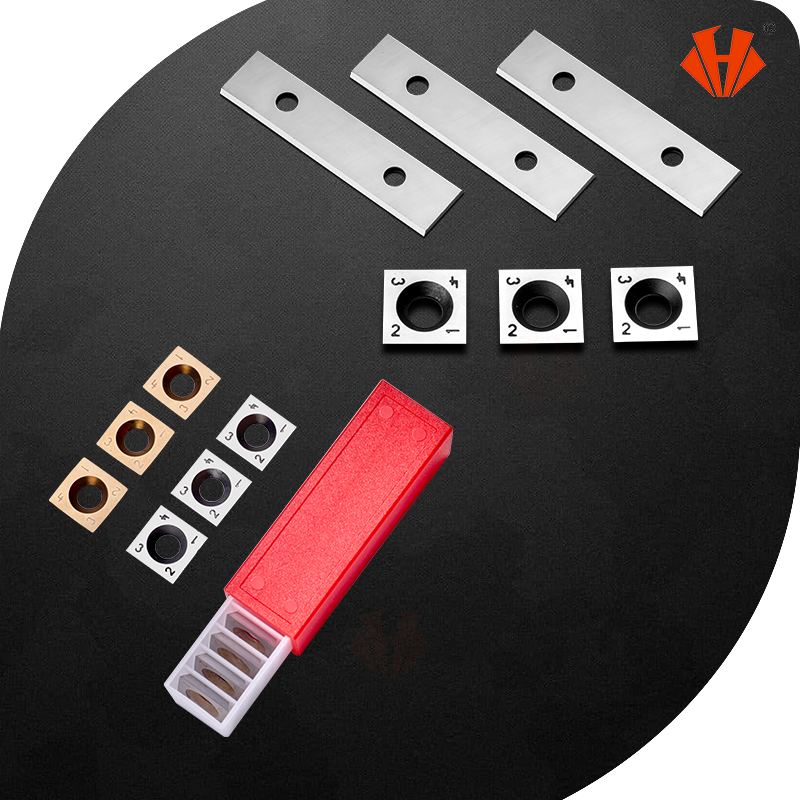
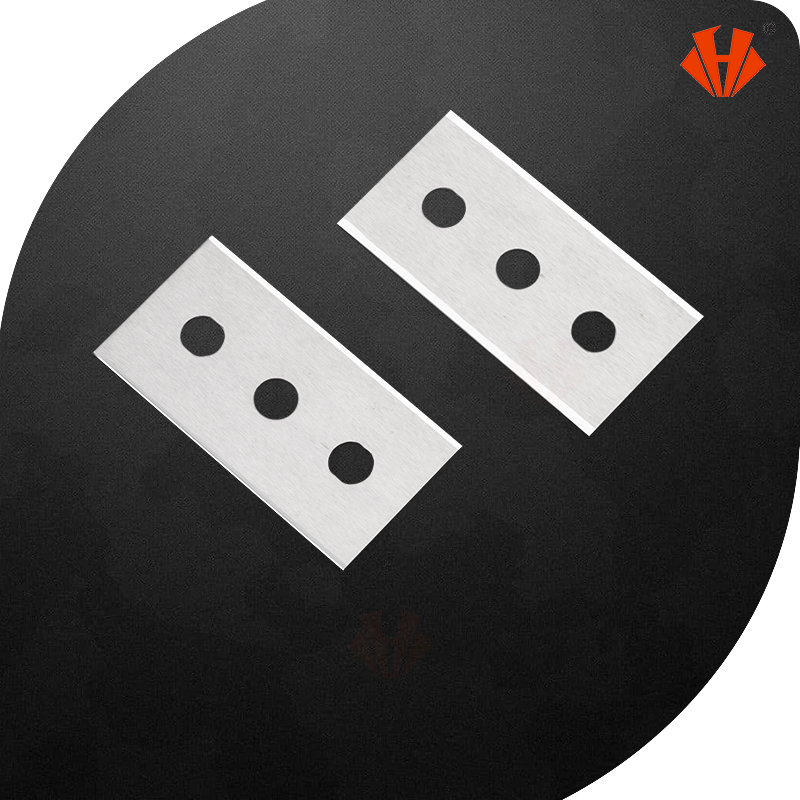
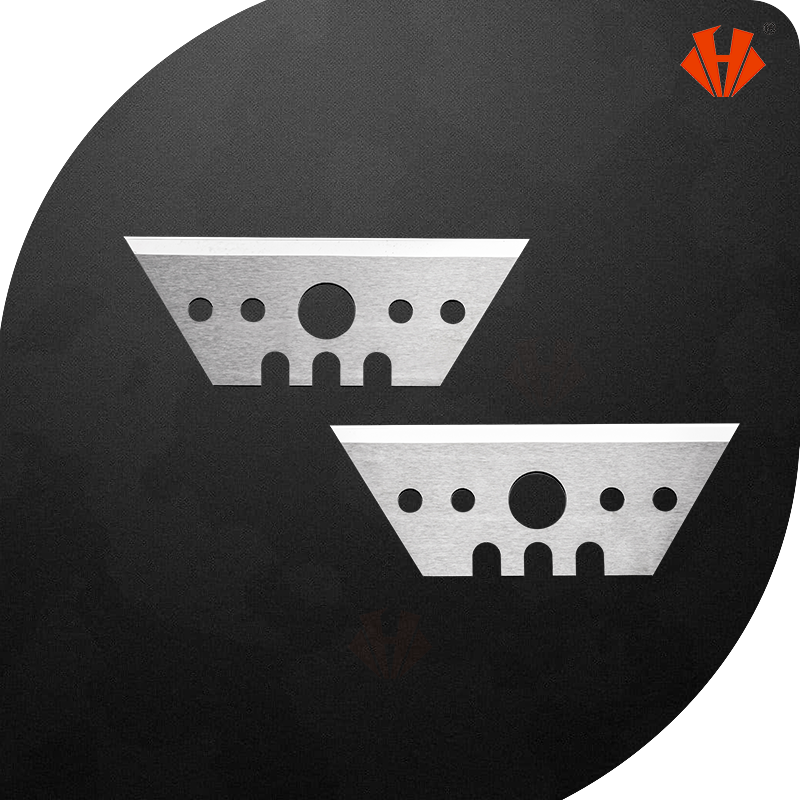
Custom Service
Huaxin Cemented Carbide manufactures custom tungsten carbide blades, altered standard and standard blanks and preforms, starting from powder through finished ground blanks. Our comprehensive selection of grades and our manufacturing process consistently delivers high-performance, reliable near-net shaped tools that address specialized customer application challenges across diverse industries.
Tailored Solutions for Every Industry
custom-engineered blades
Leading manufacturer of industrial blades
Follow us: to get Huaxin's industrial blades products releases

Customer common questions and Huaxin answers
That depends on the quantity, generally 5-14days. As an industrial blades manufacturer, Huaxin Cement Carbide plans the production by orders and customers' requests.
Usually 3-6 weeks, if you request customized machine knives or industrial blades that are not in stock at the time of purchasing. Find Sollex Purchase & Delivery Conditions here.
if you request customized machine knives or industrial blades that are not in stock at the time of purchasing. Find Sollex Purchase & Delivery Conditions here.
Usually T/T, Western Union...deposits firstm, All first orders from new customers are prepaid. Further orders can be paid by invoice...contact us to know more
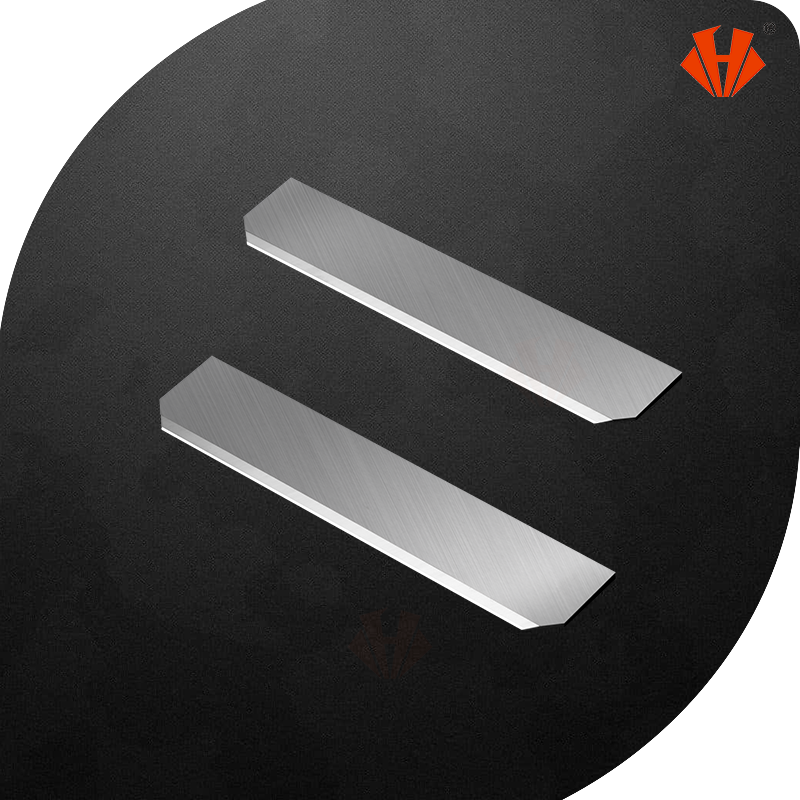
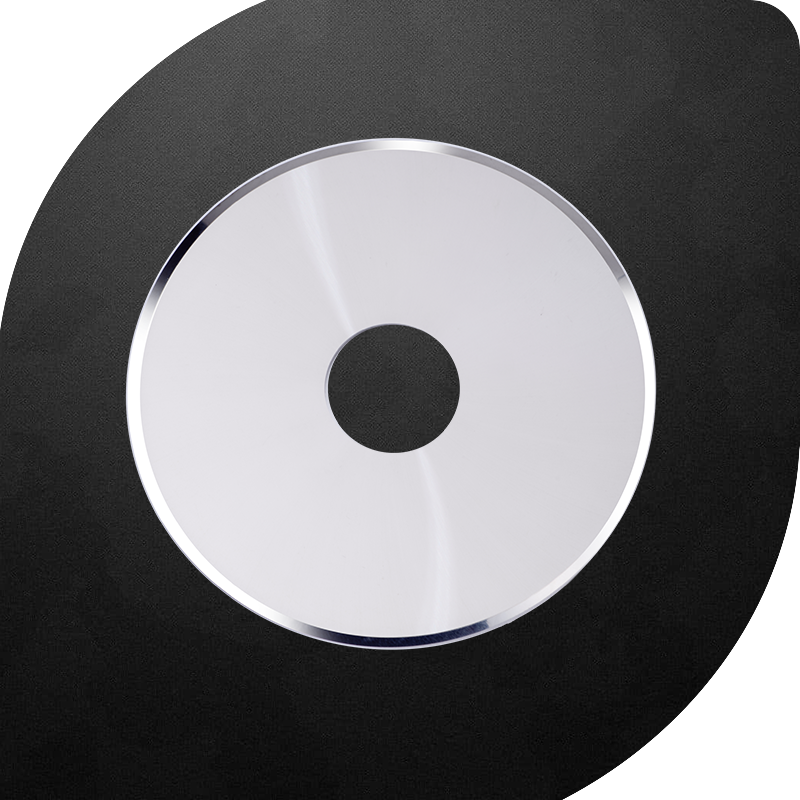
Yes, contact us, Industrial knives are available in a variety of forms, including top dished, bottom circular knives, serrated / toothed knives, circular perforating knives, straight knives, guillotine knives, pointed tip knives, rectangular razor blades, and trapezoidal blades.
To help you get the best blade, Huaxin Cement Carbide may give you several sample blades to test in production. For cutting and converting flexible materials like plastic film, foil, vinyl, paper, and others, we provide converting blades including slotted slitter blades and razor blades with three slots. Send us a query if you're interested in machine blades, and we'll provide you with an offer. Samples for custom-made knives are not available but you are most welcome to order the minimum order quantity.
There are many ways that will prolong the longevity and shelf life of your industrial knives and blades in stock. contact us to know about how proper packaging of machine knives, storage conditions, humidity and air temperature, and additional coatings will protect your knives and maintain their cutting performance.
Post time: Mar-03-2026


