
Tobacco Industry Knives: Hauni vs. Molins Machine Compatibility
Blade Engineering · Tobacco & Filter Rod Cutting
Two filter-rod lines sit fifteen meters apart on the same production floor — one built around a Molins Mark 9, the other around a Hauni Protos 70. A technician lays two circular knives side by side on the workbench. From across the room they look identical: the same silver disc, the same razor edge. Up close, the outer diameter is off by half a millimeter and the bore doesn’t line up. That half-millimeter is the difference between a clean 7,000-cut-per-minute run and a jammed line waiting on a part.
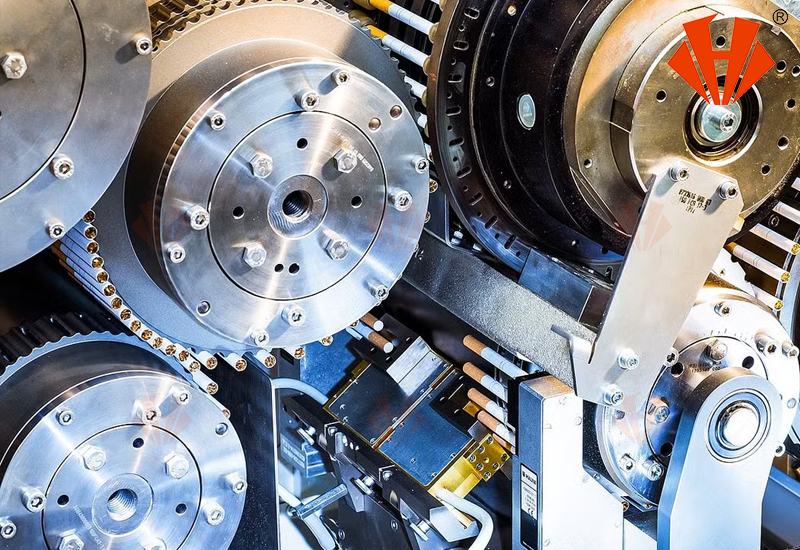 Hauni and Molins remain the two platforms most cigarette manufacturers build their lines around, and knife compatibility between them is one of the most common sourcing questions Huaxin fields from tobacco processors and filter makers. The short answer is that the two brands are not interchangeable off the shelf — but a blade engineered to the correct drawing can serve either.
Same Job, Different Tolerances
Hauni’s Protos series and older KDF filter-making machines, and Molins’ Mark 8/Mark 9 family alongside the PASSIM and HLP platforms, all perform the same basic operation — slitting or shearing a continuous rod into precise lengths at several thousand cycles a minute. But each manufacturer specifies its own drum geometry, arbor bore, and clamping method, so the circular and long knives that fit one line arrive out of spec on the other, even when the raw dimensions look close on paper. Across the tobacco cutting segment, outer diameters typically run from 15mm to 240mm, bore sizes from 4mm to 90mm, and blade thickness from as thin as 0.18mm up to 1.5mm depending on the cutting station — which is exactly why a knife has to be built against a specific machine’s drawing rather than assumed compatible by brand name alone.
Machine speed adds another layer to the sourcing decision. The Hauni Protos 70 is typically rated at around 7,000 cigarettes per minute, well above the Molins Mark 9 Classic’s roughly 5,500 cpm, so a blade running on a Protos line sees a proportionally higher number of cutting cycles per shift. A knife that holds its edge comfortably on a Mark 9 can wear noticeably faster if moved to a Protos without adjusting the carbide grade or edge geometry for the higher duty cycle.
| Platform | Common Models | Typical Knife Spec Range |
| Hauni | Protos 70 / 80 / 90 / 100, KDF2, KDF3, Max3, Max5 | OD 60–125mm, thickness 0.25–0.5mm (filter rod circular knives), common on 60mm, 63mm, 100mm and 125mm discs |
| Molins | Mark 8 / 8D / 8DK, Mark 9 / 9-5 / 9SM / 9D, PASSIM, HLP2 | Bore and clamp geometry differ from Hauni equivalents even at matching OD — drawing-matched blades required |
|
7,000
cpm — Hauni Protos 70
|
5,500
cpm — Molins Mark 9 Classic
|
0.18–1.5mm
thickness range across models
|
“Cross-brand compatibility isn’t a knife problem — it’s a drawing problem. Get the drum geometry and clamp method right, and the same carbide grade performs on either platform.”
Built to the Machine, Not the Catalog
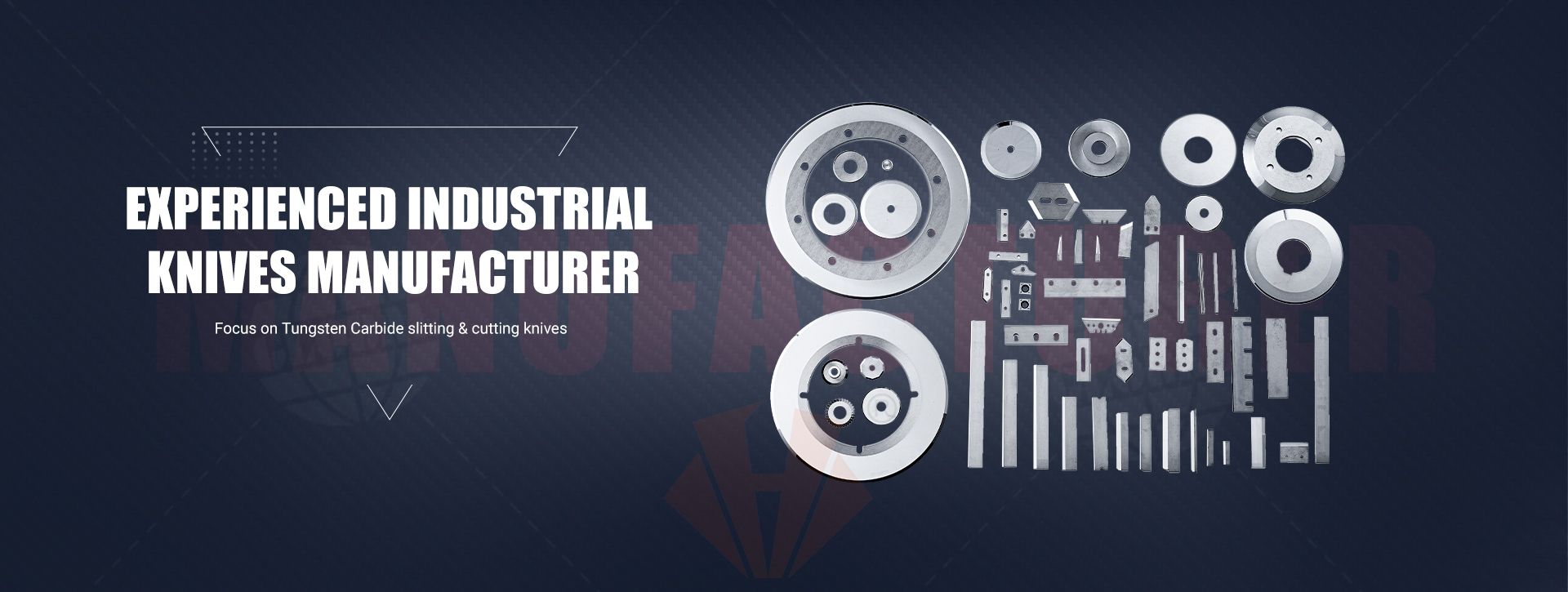
Huaxin Cemented Carbide Co. focuses on using advanced materials and manufacturing processes to produce blades that excel in hardness, wear resistance, and sharpness. Their expertise in carbide technology makes them a trusted partner for businesses in need of high-quality thin film carbide blades. On the tobacco side, that means engineering circular and long knives against the customer’s own drawing or sample rather than a generic size chart — matching Hauni’s Protos and KDF geometry on one order and Molins’ Mark 8/9 clamp specification on the next, without asking either line to compromise on cutting life.
Can a Hauni knife physically fit a Molins machine?
Rarely without modification. Even where outer diameters happen to match, bore size, clamping face, and rotational balance are typically specified differently between the two brands, so a direct swap usually causes runout or seating problems at speed.
What’s the safest way to source a replacement knife?
Supplying the original machine model and, where possible, a worn sample or technical drawing lets the blade be reproduced to the exact tolerance the drum expects — this matters more than matching brand name alone.
Does higher machine speed require a different carbide grade?
Often yes. Lines running near 7,000 cpm put more cutting cycles through a blade per shift than a 5,500 cpm line, so edge geometry and carbide grade are frequently tuned upward for the higher-speed platform to hold the same service life.
Send us your machine model or a worn sample, and Huaxin’s engineers will match the drum geometry, bore, and carbide grade to your Hauni or Molins line — no catalog guesswork.
Meet Huaxin at InterTabac & InterSupply 2026, Dortmund — Hall 3, Booth 3.A30.
See our exhibition details →
Post time: Sep-02-2026


