
Wood & Veneer Processing
Veneer Slicing Knives: Achieving the Perfect Surface Finish
Hold a sheet of sliced walnut veneer up to the light and the story of the cut is written across its face. A knife that tracked true leaves behind an even, silken sheen from edge to edge. A knife that wandered even a few microns off its line leaves faint ridges, dulled grain, or the telltale roughness that graders call knife marks. In an industry where a single flitch can be worth thousands of dollars once it reaches a furniture showroom in Milan or a paneling project in Shanghai, that difference between “flawless” and “second grade” often comes down to one component: the slicing knife itself.
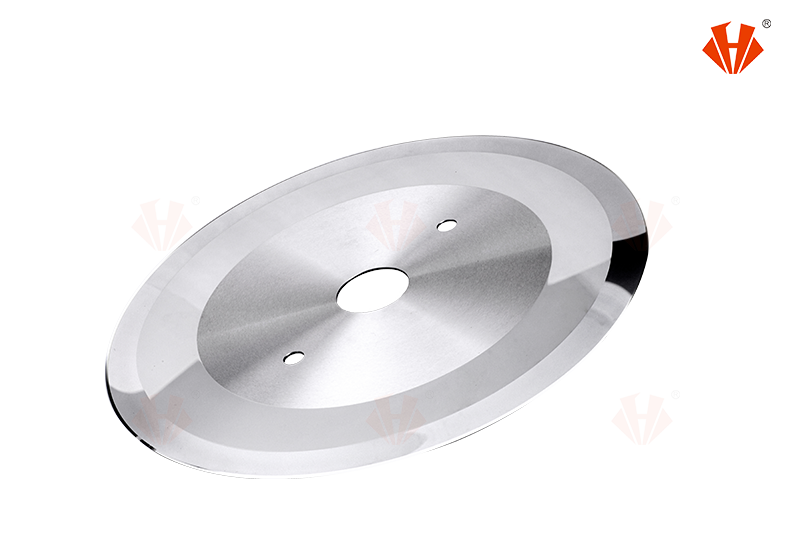
Veneer mills rarely talk about knives the way they talk about lathes, slicers, or dryers — yet the blade is the only part of the machine that actually touches the wood. Everything upstream (log conditioning, flitch selection, steaming schedules) exists to prepare the timber; everything downstream depends on the knife delivering a clean, consistent parting of the fibers.
What Actually Shows Up on the Veneer Face
Surface defects on sliced veneer are rarely mysterious once you trace them back. Fine parallel ridges running the length of a sheet usually point to a micro-chipped or unevenly honed cutting edge. A dull, matte patch instead of a bright sheen often signals localized wear where the knife has been doing more work than the rest of its length — common on wider flitches or harder species like oak and beech. Occasional torn fiber or “fuzzy” grain, especially near knots, points to insufficient edge sharpness relative to the wood’s hardness and moisture content, a relationship well documented in veneer-cutting research on species such as khaya and pterygota, where knife marks and shelling were among the most frequently recorded countable defects in graded sheets.
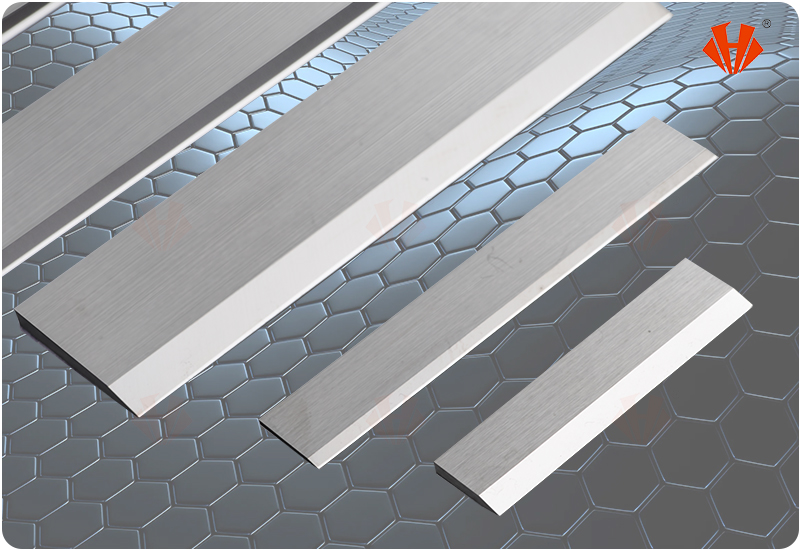
The nose bar setting, steaming schedule, and slicer alignment all play supporting roles, but the knife edge is the variable that changes fastest — and the one that mills have the most direct control over through material selection and regrinding discipline.
“A veneer knife doesn’t need to be sharp once. It needs to still be sharp on flitch number four hundred.”
Tool Steel vs. Cemented Carbide: Where Finish Quality Diverges
Traditional high-carbon tool steel knives can be honed to an excellent initial edge, but that edge degrades quickly against abrasive species, silica-rich tropical timber, or long production runs. Tungsten carbide changes the wear curve rather than the starting sharpness — the edge holds its geometry through far more linear meters of cut, which is what keeps sheet-to-sheet surface quality consistent instead of drifting downward through a shift.
| Factor | High-Carbon Tool Steel | Cemented Carbide |
|---|---|---|
| Edge retention | Moderate; dulls faster on hard/abrasive species | High; stable geometry over long runs |
| Surface consistency across a shift | Declines as edge wears, requiring frequent regrinds | Stays even for significantly more output between sharpenings |
| Performance on hard/tropical timber | Prone to micro-chipping | Better resistance to chipping and edge rollover |
| Minimum stable slicing thickness | Limited by edge stability at ultra-thin cuts | Holds a stable edge down to very thin gauges |
| Regrind frequency & downtime | Higher — more frequent changeovers | Lower — fewer knife changes per production run |
Four Variables That Determine the Finished Surface
Bevel angle and edge geometry
Matched to species density and cutting speed; too acute an angle chips on hard timber, too obtuse tears soft fiber.
Substrate material and hardness
Carbide grade selection directly affects how long an edge holds its line before the surface finish begins to drift.
Nose bar and pressure bar setting
Works with the knife edge to compress and support fiber ahead of the cut, reducing tear-out on brittle or irregular grain.
Grinding precision and straightness
A knife ground true along its full length prevents the thickness variation that shows up as banding across the sheet.
Manufacturing Focus
Where Huaxin Cemented Carbide fits into this picture
Huaxin Cemented Carbide Co. (www.huaxincarbide.com) builds its veneer slicing knives around exactly the variables that determine finish quality: carbide grade selection matched to species hardness, precision grinding for edge straightness, and heat treatment processes tuned for wear resistance under continuous production. The company’s thin film carbide blades are engineered to hold a stable edge across long slicing runs, which is what keeps a flitch’s surface finish consistent from the first sheet to the last.
Beyond veneer slicing, the same materials science underpins Huaxin’s broader line of industrial cutting blades — including tools for textile and staple fiber cutting, tobacco processing, corrugated board, lithium battery separator slitting, and carbon fiber cutting — reflecting a manufacturing approach built around hardness, wear resistance, and sharpness across demanding cutting applications.
Reading the Finish Before It Leaves the Mill
Experienced mill operators check surface quality the same way graders eventually will: angled light across the sheet, a fingertip run against the grain, and a look for consistent sheen edge to edge. Rotary-cut veneer and flat-sliced veneer will always carry different grain character by nature of the cutting method itself, but within either method, a well-maintained carbide knife is what keeps that character clean rather than marred by ridges, tear-out, or dull patches. Industry grading references such as ANSI/HPVA HP-1 exist precisely because that difference has real commercial value once the veneer reaches a cabinet shop or architectural panel line.
For mills producing at scale, the practical takeaway is straightforward: fewer knife changes and more predictable regrind cycles translate directly into fewer graded-down sheets, which is where a carbide knife’s longer edge life pays for itself over a production run.
Frequently Asked Questions
How thin can a carbide veneer slicing knife cut without losing edge stability?
With correct grinding and support from the nose bar, cemented carbide knives can hold a stable edge down to roughly 0.1mm slice thickness, a range where tool steel edges tend to flex or dull unevenly.
Why does veneer surface quality decline over the course of a production shift?
As the knife edge wears, its geometry changes slightly, which shows up as gradually rougher or less uniform surface finish until the knife is reground or replaced. Carbide slows this decline compared with tool steel.
Does knife hardness matter more than bevel angle for surface finish?
They work together. Hardness and wear resistance determine how long a given bevel angle holds its shape; the wrong bevel angle for a species will produce chipping or tearing regardless of how hard the material is.
Can custom knife geometries be made for specific slicing machines?
Yes. Veneer slicing knives are typically produced to match a specific machine’s dimensions, mounting, and cutting angle, since fit directly affects both cut quality and machine wear.
Precision Carbide Knives for Veneer Slicing
Talk to Huaxin Cemented Carbide about knife geometry, carbide grade, and regrind programs tailored to your species mix and production volume.
www.huaxincarbide.com |
lisa@hx-carbide.com |
+86-18109062158
Post time: Aug-06-2026


