
Dry-dock projects measure productivity in square meters. On a 3,500 m² surface preparation job in Southeast Asia, a maintenance contractor discovered that nearly a fifth of labor time was disappearing—not to the work itself, but to replacing and resharpening carbon steel scrapers every few hours.
The problem isn’t unusual. In marine service, a scraper faces conditions that accelerate blade wear far beyond anything encountered in standard industrial maintenance: multi-layer epoxy coatings, embedded barnacles, weld slag, rust scale, and continuous salt spray. For standard steel, this combination is punishing.
“Nearly 18–22% of labor time was consumed by tool replacement and re-sharpening alone—before a single additional square meter was cleaned.”
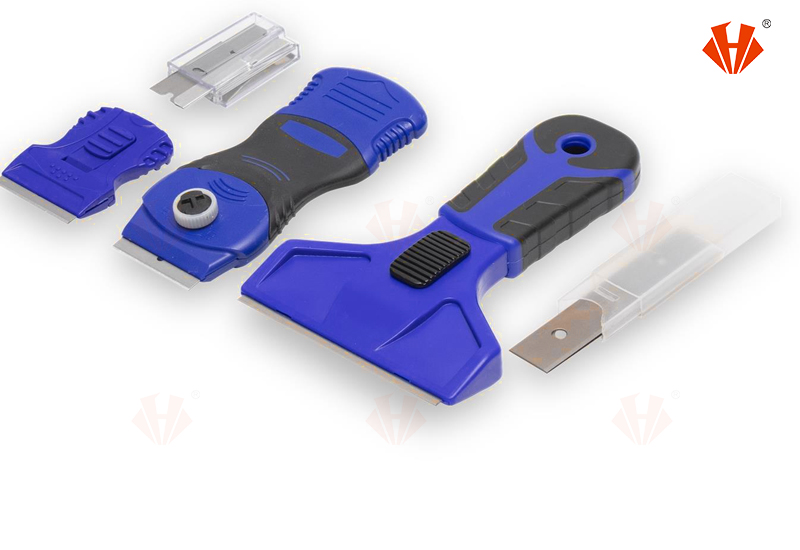
The Actual Cost of a Cheap Blade
Procurement decisions in maintenance operations tend to default to unit price. A pack of carbon steel scraper blades costs less than a single tungsten carbide insert—on paper. What the purchase order doesn’t capture is frequency of replacement, workflow interruption, and the time cost of re-sharpening.
In real field conditions, conventional scrapers suffer from a predictable sequence: the edge rounds within a few hours of contact with hard coatings; operators push harder to compensate, accelerating fatigue; the blade goes for sharpening or replacement; and the cycle repeats. On large projects, this adds up fast.
| Performance Factor | Carbon / Spring Steel | Tungsten Carbide |
|---|---|---|
| Edge retention | Poor | Excellent |
| Re-sharpening frequency | High | Low |
| Corrosion resistance (salt spray) | Limited | Strong |
| Consistent scraping force | Degrades quickly | Maintained |
| Usable service life | Short | Extended |
What Cemented Carbide Actually Delivers
Tungsten carbide’s advantage in scraper applications comes from two properties that happen to address marine service’s two biggest blade killers: abrasive wear and corrosion.
On the wear side, carbide cutting edges operate at HRA 89–92 hardness and compressive strength above 4,000 MPa. Wear resistance runs 5 to 15 times higher than conventional steel alloys. In practice, this means a blade that maintains effective scraping geometry across multiple shifts—not multiple hours.
The corrosion side is less discussed but equally relevant. Carbon steel tools stored onboard or in dockside workshops develop surface rust quickly in high-humidity, salt-laden conditions. Because the cutting edge of a carbide blade consists primarily of tungsten carbide particles rather than iron alloys, it resists the red-rust degradation that progressively compromises steel tools. After extended idle periods—common in offshore maintenance schedules—carbide blades return to service in the same condition they were stored.
Field Results: Offshore Support Vessels
A marine maintenance contractor servicing offshore support vessels tracked blade consumption before and after switching to carbide scrapers. The comparison was direct.
Thinking in Cost Per Square Meter
The right performance metric for scraper blades isn’t unit price. It’s cost per square meter of surface prepared—an accounting that includes blade purchase, replacement frequency, sharpening labor, and workflow downtime.
On a dry-dock project spanning thousands of square meters, the difference between a blade that lasts one shift and one that lasts ten becomes a project-level budget variable. Maintenance managers who have run the numbers consistently find that higher-performance tools reduce total operating cost, even when the blade itself costs more.
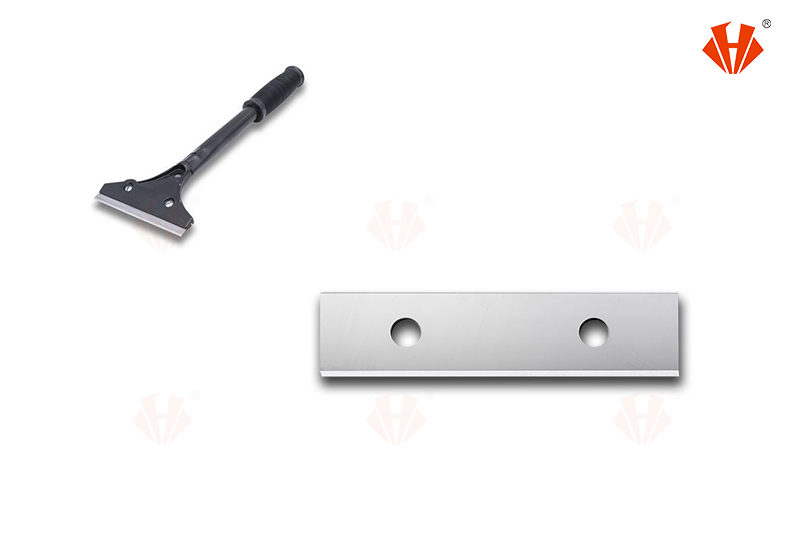
Standard Dimensions & Applications
Huaxin Cemented Carbide supplies tungsten carbide paint scraper blades in standard and custom configurations. The widely specified size for marine maintenance is:
Typical Applications
- Ship hull maintenance
- Dry dock refurbishment
- Offshore platform repair
- Tank surface preparation
- Rust scale removal
- Marine coating removal
- Ballast tank cleaning
- Heavy industrial maintenance
In ship repair operations, project outcomes are often determined not by major equipment, but by hundreds of small tools used every day. A scraper blade that holds its edge, resists the marine environment, and reduces interruptions is a quiet contributor to project profitability—and a straightforward reason why more contractors are specifying carbide.
Manufacturer of tungsten carbide cutting and scraping tools for marine, industrial, and precision manufacturing applications. Custom dimensions available. Factory direct supply.
Post time: Jun-24-2026


